The UAE desert isn’t a faraway wilderness — it’s the country’s backyard. The Arabian Desert begins almost the moment you leave the city: from Dubai, you’re on real dunes in 40–60 minutes. This guide explains where the desert begins, which regions matter, what to do in each — and how to experience it safely.
Where the UAE Desert Begins
Nearly 80% of the UAE is desert, part of the great Arabian Desert. There’s no single “desert gate” — the city simply thins out into sand. From Dubai, the first dune fields appear past Al Awir on the Dubai–Hatta Road and around Lahbab to the south-east. For the full price breakdown of the classic desert experience, see our desert safari Dubai prices guide.
The Main Desert Regions of the UAE
Lahbab: The Red Dunes
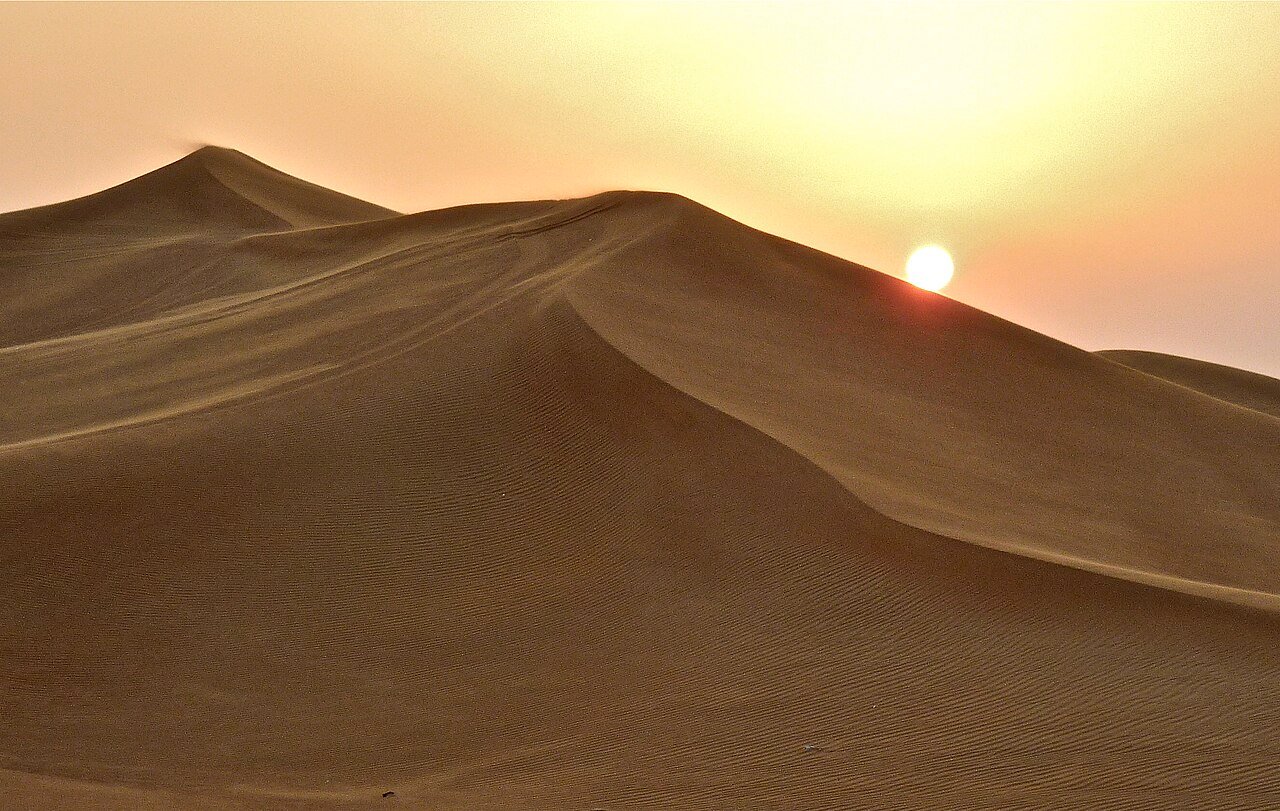
Lahbab (Lehbab), south-east of Dubai, is the UAE desert most tourists actually see — tall, rust-red dunes that photograph beautifully at sunset, and the dune-bashing capital: almost every Dubai safari runs its 4×4 session here.
Al Awir and Margham: Camps and Conservation
Al Awir on the Dubai–Hatta Road hosts most of the big evening safari camps. Further along, Margham is home to the Dubai Desert Conservation Reserve (DDCR) — 225 square kilometres of protected desert where dune bashing is banned and wildlife drives, falconry and heritage safaris run instead.
Liwa Oasis and the Empty Quarter
South of Abu Dhabi, the Liwa Oasis marks the edge of the Empty Quarter (Rub’ al Khali) — the largest continuous sand desert on Earth, with dunes far bigger than anything near Dubai. It’s 3–4 hours from Abu Dhabi or Dubai: a weekend trip, not a day-tour add-on.
What to Do in the UAE Desert
Desert Safari (Dune Bashing + Camp Evening)
The classic: afternoon pickup, 30–40 minutes of dune bashing, sunset photos, then a Bedouin-style camp with camel rides, henna, BBQ dinner and shows. Standard packages run AED 90–210 per person. Compare desert safari ticket options in Dubai before booking.
Overnight Camping Under the Stars
Stay after the day-trippers leave: sleep in a Bedouin-style tent, stargaze in genuinely dark skies, and wake to sunrise over the dunes. Our overnight desert safari guide covers prices from AED 269 and what the night actually includes.
Wildlife and Heritage Experiences
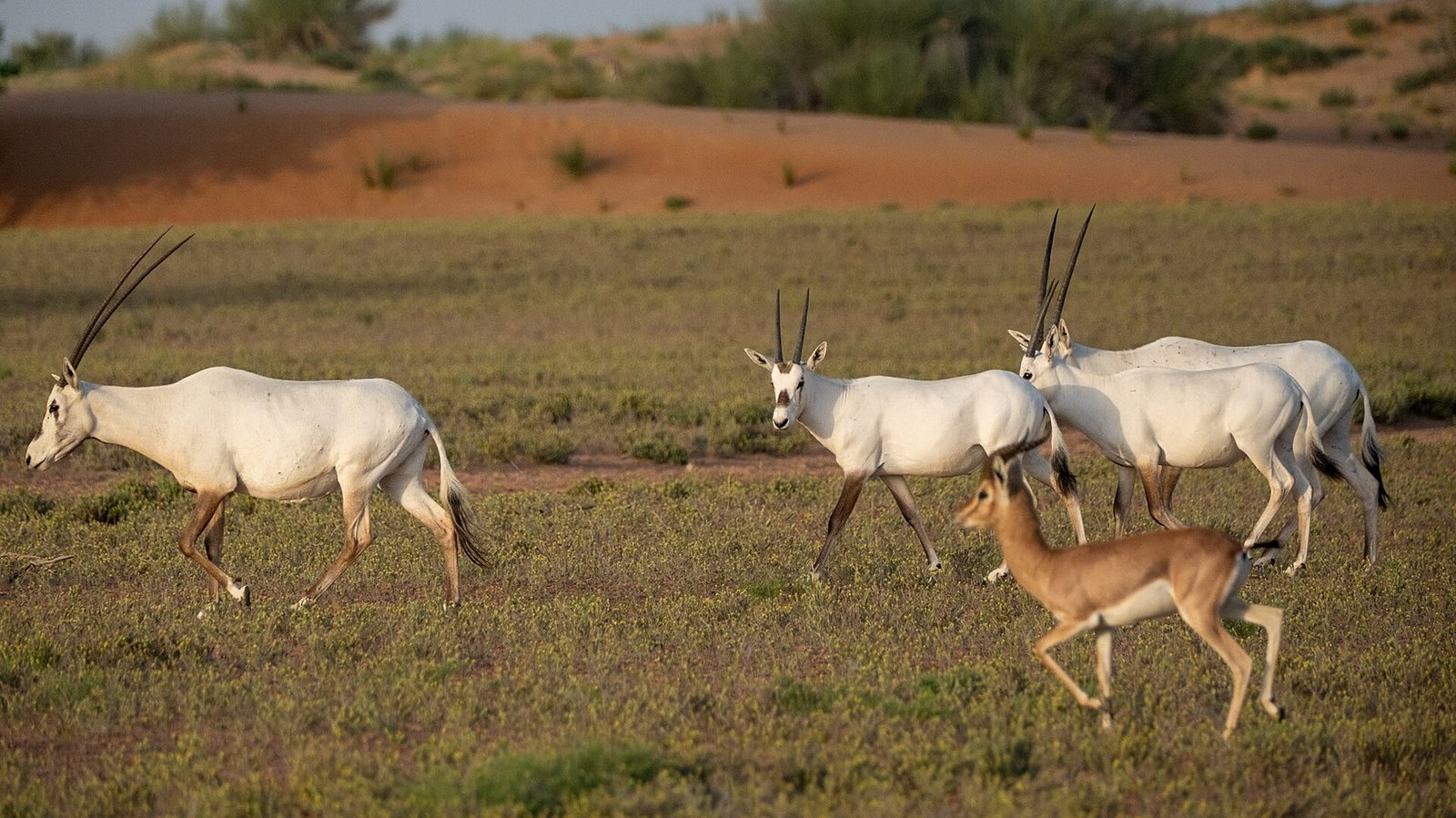
In the Dubai Desert Conservation Reserve you can spot Arabian oryx, gazelles and desert foxes on a guided wildlife drive — no dune bashing, just the desert as it was. Heritage safaris add falconry displays, camel treks and traditional Emirati breakfast in a Bedouin camp.
Adventure Sports: Sandboarding, Quad Bikes, Dune Buggies
Sandboarding is usually included free with safaris. Quad bikes and dune buggies are paid add-ons (expect AED 150–400 for 30 minutes) — fun, but they’re the classic upsell, so budget for them in advance rather than deciding at the dunes.
UAE Desert Wildlife
The desert looks empty until you learn to look. The Arabian oryx — reintroduced after near-extinction — roams the conservation reserve alongside sand gazelles, desert foxes and dozens of bird species. Early morning is the best viewing time: one more reason the overnight safari beats the evening rush.
Best Time to Visit the UAE Desert
November to March is desert season: 24–28°C days, cool evenings, clear skies. From May to September, daytime temperatures pass 45°C — book sunrise or sunset slots only, carry far more water than you think you need, and skip midday dune bashing. Pair the desert with our best public beaches in Dubai for the full winter-sun itinerary.
Can You Visit the Desert Without a Tour?
Yes — but with limits. You can drive to desert-edge spots like Al Qudra in any car. Never take a regular car onto the dunes: real dune driving needs a 4×4, deflated tyres and recovery gear — tourists get stuck every weekend. If you self-drive, rent a proper 4×4 and go with someone experienced. For everyone else, a guided safari is cheaper than a tow truck.
Desert Safety: The Non-Negotiables
Carry more water than you need (at least 2 litres per person for a half-day), tell someone your route if self-driving, and never walk away from your vehicle in summer heat. Wear sunscreen even in winter — sand reflects UV hard. And if a guided tour feels “too cheap to be true” at AED 35–50 with pickup promised, it is: read the scam-price section of our pricing guide before you book.
Frequently Asked Questions
Where does the desert start in the UAE?
What is the main desert in the UAE?
Can you visit the UAE desert without a tour?
What is the best time to visit the UAE desert?