

Co-living in Dubai is legal — but only the licensed way. Dubai’s new shared-housing law, Law No. 4 of 2026, in force since late August 2026, changed the rules completely: only the property owner or a licensed establishment may rent out shared housing, tenants may not sublet rooms, and every shared unit needs a Dubai Municipality permit. The fine for breaking the rules runs from AED 500 to AED 500,000. This guide explains the law in plain language, the 44 approved areas, what rooms actually cost, and which operators are genuinely live in Dubai — checked on 13 November 2026.
Is Co-Living Legal in Dubai?
Yes — co-living is legal in Dubai when it is licensed. The short version of the new law is this: shared housing is a regulated activity, not an informal arrangement. A unit used for shared housing must have a Dubai Municipality shared-housing permit (applied for through the “Build in Dubai” platform, usually valid one year and renewable), it must sit in an approved area, and it must meet space and safety standards. Advertising shared housing without a permit is also prohibited. The old model — a tenant rents a flat and then rents out rooms, partitions and bedspaces to strangers — is now explicitly banned. If you are looking for a room, the one question that matters is: can the operator show you the permit?
What “Licensed” Co-Living Actually Means
Licensed means four things together: the operator holds the master lease or is an authorised establishment; the unit has a Dubai Municipality shared-housing permit in an approved area; the tenancy is Ejari-registered; and the unit meets the space and safety standards below. Everything else — a bedspace in a partitioned flat, a room rented to you by another tenant, a “no documents needed” deal — is informal bedspace, and under the 2026 law it is illegal. Licensed operators also bill all-inclusive: DEWA, chiller, Wi-Fi, cleaning and maintenance in one monthly price, with no separate DEWA or Ejari setup for you.
The 3 Legal Ways to Share a Home in Dubai
First, a multi-tenant Ejari contract: several named tenants on one tenancy contract for one unit, registered with DLD, with co-occupants recorded through the Dubai REST app. Second, a licensed operator: a company such as HIVE or Dotcoliv that holds the master lease and the permit and rents you a room or bedspace under its own agreement. Third, an owner-rented room: the property owner themself rents out a room in a permitted unit. What is not legal is a tenant subletting any part of a unit — Article 24 of Law No. 26 of 2007 already required the landlord’s written consent for any sublease, and Law No. 4 of 2026 now bans tenant subletting outright.
Dubai Shared Housing Law 2026: The Rules That Matter
| Detail | Info |
|---|---|
| The law | Law No. 4 of 2026, Regulating Occupancy & Management of Shared Housing; issued 11 March 2026, in force since late August 2026 |
| Who can rent shared housing | Only the property owner or a licensed establishment; tenants may not sublet any part of a unit |
| Permit | Dubai Municipality shared-housing permit mandatory before use; advertising without one is prohibited |
| Fines | AED 500–500,000; a repeat violation within one year doubles the fine, up to AED 1,000,000 |
| Other penalties | Activity suspended up to 6 months, permits or licences cancelled, utilities disconnected, eviction |
| Compliance deadline | Existing shared housing has until 8 September 2027 to comply; structural violations must be removed immediately |
| Applies to | All of Dubai including free zones; collective labour accommodation is excluded (separate law) |
Do not quote the old AED 50,000 figure for unapproved sharing — that was pre-2026 guidance and is superseded by the Law 4 of 2026 range above. The law’s grace period runs to 8 September 2027, which is why you will still see non-compliant listings today — but the direction of travel is clear, and enforcement stepped up after a June 2025 Marina tower fire, with inspections in Satwa, Al Rigga, Al Barsha and Muraqqabat.
Where Shared Housing Is Allowed — 44 Approved Areas
Dubai Municipality has published more than 44 approved areas. Fully permitted throughout are Al Ras, Al Dhagata (Deira), Al Bateen, Sabkha, Eyal Nasser, Al Murar, Naif, Al Rigga, Al Muteena, Al Muraqqabat, Riqqa Al Bateen, Hor Al Anz, Al Waheeda, Al Rashidiya, Al Nahda 1 & 2, Al Qusais, Al Twar 5, Muhaisnah 4, Souq Kabeer, Umm Hurair 1 & 2, Al Raffa, Karama, Oud Metha, Jumeirah 1, Al Badaa, Al Barsha 1 and Al Warqa 1. Partially permitted — designated parts only — are Abu Hail, Al Baraha, Al Hamriya, Mankhool, Al Jaffiliya, Al Hudaibiya, Al Satwa, Port Saeed, Hor Al Anz East, Al Mamzar and Al Qusais Industrial 1–5.
Banned for individual (unrelated-person) shared housing are Sheikh Zayed Road, Jumeirah Road, Al Wasl Road and Baniyas Road — family housing only on those roads. That has a direct consequence for the most-searched co-living location in the city, covered in the Marina section below.
Co-Living Room Sizes in Dubai
| Detail | Info |
|---|---|
| Minimum space | 5 sqm of bedroom space per person |
| Minimum room size | Bedrooms and living rooms at least 10.5 sqm |
| Maximum occupancy | 2 tenants per bedroom |
| Not bedrooms | Kitchens, bathrooms, corridors, balconies, storage rooms and parking cannot become bedrooms |
| Partitions | Partitioning an apartment into extra rooms is not permitted; wood or non-fire-rated gypsum partitions without a permit are illegal |
| Mixing | A unit must be allocated to either families or individuals — never mixed in one unit |
| Building rule | The whole building or villa must be allocated to shared housing, not part of it |
If a listing shows a balcony bed, a kitchen converted into a bedroom, or a wooden partition wall, it is not a room-size quirk — it is a violation. Walk away, whatever the price.
Co-Living in Dubai: Prices Compared
| Operator / Option | Price per Month |
|---|---|
| Dotcoliv bedspace | AED 900 standard / AED 1,050 premium |
| Dotcoliv privacy cabin | AED 1,000 standard / AED 1,400 premium |
| Compliant shared-housing room (expert estimate) | About AED 2,000–3,000 (Khaleej Times, October 2026) |
| Licensed co-living per person (typical) | AED 4,500–6,500 |
| Dubai Marina private room (live listing) | AED 6,190 on a 12-month contract (HAB-Living, Marina Arcade Tower) |
| HIVE studio / 1-bed / 2-bed | From AED 7,000 / AED 8,500 / AED 12,000 |
| Colife studio (furnished rental) | From AED 7,500; 1-bed AED 10,600–19,900 |
| You&Co / Co-Living Legends | Not published — contact the operator (expected, check before booking) |
The gap between a AED 900 bedspace and a AED 7,000 studio is the whole story of this market: the cheapest options are bedspaces in shared rooms, the mid-range is a compliant private room at AED 2,000–3,000, and the top end is a private furnished studio in a managed building. Anything far below AED 900 a month should be treated as a red flag, not a bargain.
Co-Living in Dubai Marina
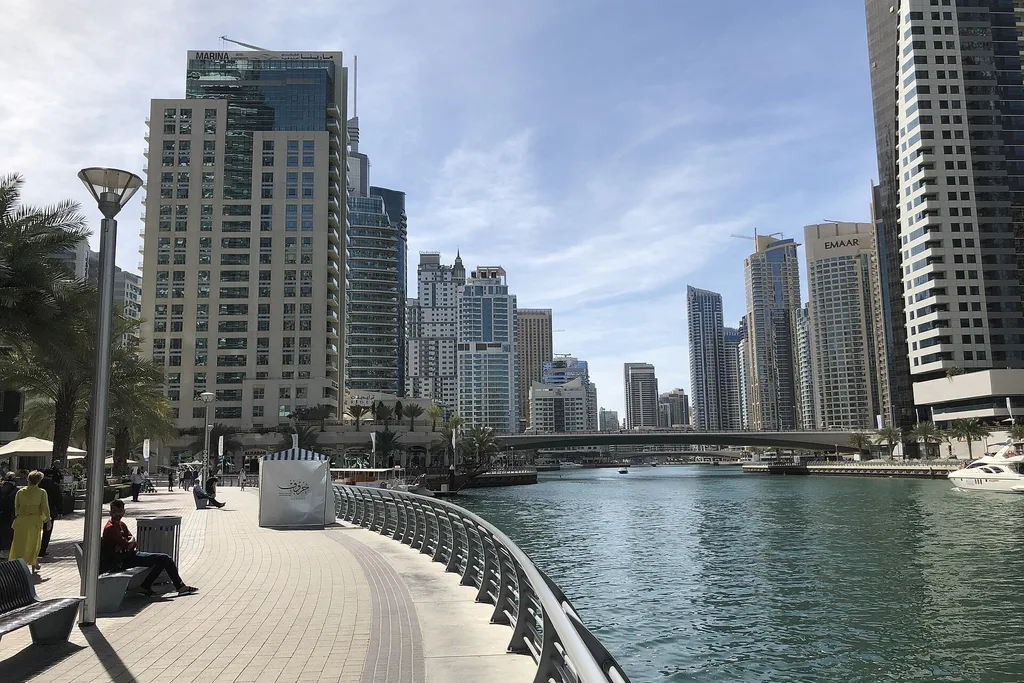
This is the keyword everyone searches — and the honest answer is disappointing. Dubai Marina fronts Sheikh Zayed Road, so individual shared housing there is restricted under the 2026 approved-areas rules. We found no dedicated licensed co-living operator based in the Marina. What does exist is private rooms in Marina apartments: a live Dubizzle listing from October 2026 offers a private bedroom with its own bathroom in Marina Arcade Tower, all bills included, at AED 6,190 a month on a 12-month contract (AED 500 more a month on a 6-month contract, AED 1,000 more on a 3-month contract), with a AED 2,500 refundable deposit and a tenancy contract provided. Older guides quote Marina bedspaces from around AED 1,500 a month to AED 3,000-plus premium — treat those as expected and pre-Law-4 context. If Marina is non-negotiable, a furnished monthly rental such as Colife (studios from AED 7,500 a month) or a whole-studio rental is the safer legal route — see our studio for rent in Dubai at AED 2,000 a month guide for what is realistic at the budget end.
Best Licensed Co-Living Operators in Dubai
HIVE — JVC
HIVE (cometohive.com) in JVC, District 14, opened in January 2022: a six-storey building with 117–175 rooms, studios to four-bedroom units, fully furnished with all bills included (DEWA, Wi-Fi, maintenance), no broker fee, monthly payment through an app, coworking, rooftop, gym, pool, cinema and events. Studios from AED 7,000 a month, one-bed from AED 8,500, two-bed from AED 12,000, four-bed from AED 18,000 (Dubizzle guide, updated September 2026). One nuance to flag: JVC is not on Dubai Municipality’s published approved-areas list, and HIVE is marketed as operating under a holiday-home and co-living licence — verify its permit status before calling it licensed shared housing outright.
You&Co — Dubai Production City
You&Co (youco-live.com) in Dubai Production City (IMPZ), operating since 2021: 249 apartments and 769 rooms across three buildings, with private rooms, studios and two-to-three-person units, indoor coworking, gym, pool, cinema and library, all-inclusive and pet-friendly, about 15 minutes from the Marina. Prices are not published — contact the operator. Do not trust any monthly AED figure you see quoted for You&Co without checking it first.
Co-Living Legends — Near Metro Stations
Co-Living Legends (colivinglegends.com) runs women-only luxury shared apartments near metro stations, with a private bathroom per room and all-inclusive pricing (utilities, air conditioning, weekly cleaning, 24/7 maintenance, CCTV) and a vetting process. Prices are not published and the minimum stay is three or six months depending on the unit — contact the operator.
Dotcoliv — Al Nahda, Al Qusais, Al Barsha
Dotcoliv (dotcoliv.com) operates in Al Nahda 1, Al Qusais 1 and Al Barsha 1 — all on or near the approved-areas list — with bedspaces, privacy cabins and private rooms in men-only or women-only homes (no couples, 18-plus only). Prices are published: standard bedspace AED 900 a month, standard privacy cabin AED 1,000, premium bedspace AED 1,050 and premium privacy cabin AED 1,400, on monthly agreements with 15 days’ notice. The bedspace model sits exactly where Law 4 of 2026 bites, so ask for the Dubai Municipality permit before booking.
Flexible-Stay Alternatives (Not Shared Co-Living)
Do not confuse these with co-living. Colife is a furnished apartment rental service (Marina, JLT, Business Bay, JVC; 500-plus apartments), studios from AED 7,500 a month. Vonder offers furnished apartments at City Walk and Bluewaters (one-bed from AED 17,000 a month). The Community by AQUA is an aparthotel in JVT and Motor City. The Muse Dubai is an aparthotel in Jumeirah Garden City. And The Collective by Emaar is a for-sale residential project in Dubai Hills Estate and Dubai South — apartments to buy from AED 671,888, not a place to rent a room. Similarly, global brands such as Node, SmartStay, keyper and Bedndesk have no verified Dubai presence — do not book with anyone claiming to represent them here.
Who Co-Living Suits — and Who Should Skip It
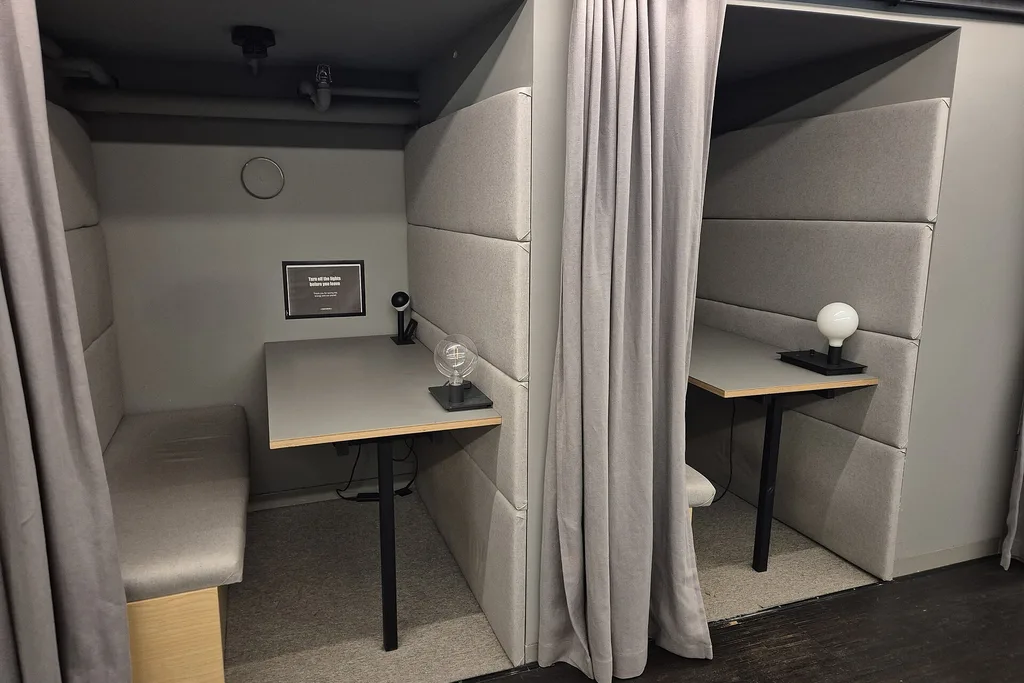
Co-living suits singles, young professionals, newcomers to Dubai and remote workers who want one all-inclusive bill, a furnished room and a ready-made community without setting up DEWA, Ejari and furniture from scratch. It suits people who value flexibility — monthly agreements and short notice periods — over space. Skip it if you need a family-sized home, if you want to choose your flatmates, if you work night shifts and need guaranteed quiet, or if you are on a tight budget: a compliant private room at AED 2,000–3,000 a month is usually better value than a AED 900 bedspace once you factor in privacy and the legal risk.
How to Book a Legal Co-Living Room in Dubai
Follow these steps, in order. 1. Check the permit: ask the operator for the Dubai Municipality shared-housing permit number and the approved area — a legitimate operator shows it. 2. Check the area: confirm the building is in one of the 44 approved areas, not on Sheikh Zayed Road, Jumeirah Road, Al Wasl Road or Baniyas Road. 3. Ask for Ejari or co-occupant registration: you should be registered as a co-occupant through the Dubai REST app with your Emirates ID number and date of birth. 4. Inspect in person: measure the room, check the 5 sqm per person and 10.5 sqm minimums, and look for partitions, balcony beds and kitchen conversions. 5. Read the agreement: check the deposit, notice period and what is included — bills, Wi-Fi, cleaning, maintenance. 6. Pay by traceable means: never cash-only. Documents you will need: Emirates ID (or passport copy for Dotcoliv-style operators) and an emergency contact.
Red Flags & Scams to Avoid
Walk away from any of these: a tenant renting you a room (they cannot legally sublet); wooden partitions or a “bedroom” that used to be a balcony or kitchen; no Ejari and no co-occupant registration; a cash-only deposit with no receipt; “no documents needed”; a price far below AED 900 a month; or a “shared” flat fronting Sheikh Zayed Road. Also beware of listings that use the names of global co-living brands with no Dubai presence, and of any operator that will not show you a permit. If it feels secretive, it is non-compliant — and under the 2026 law, the tenant can be evicted along with the operator’s fine.
Alternatives to Co-Living
If licensed co-living does not fit, the alternatives are a whole studio rental (the safest legal fallback in non-approved areas, and the cheapest private option — see our guide to a furnished studio for rent in Dubai at AED 2,000 a month), a hotel apartment or aparthotel with a monthly package, or a furnished monthly rental through a service such as Colife. A shared flat with friends on a single multi-tenant Ejari contract is also legal — just make sure every occupant is registered and the landlord has given written consent.
Frequently Asked Questions
Is co-living legal in Dubai?
How much does co-living cost per month in Dubai?
Do I need Ejari for a shared room in Dubai?
Are partitions legal in Dubai?
What is the fine for illegal shared housing in Dubai?
Can I co-live in Dubai Marina?
What documents do I need for co-living in Dubai?
What is the minimum stay for co-living in Dubai?
Last updated: 13 November 2026