
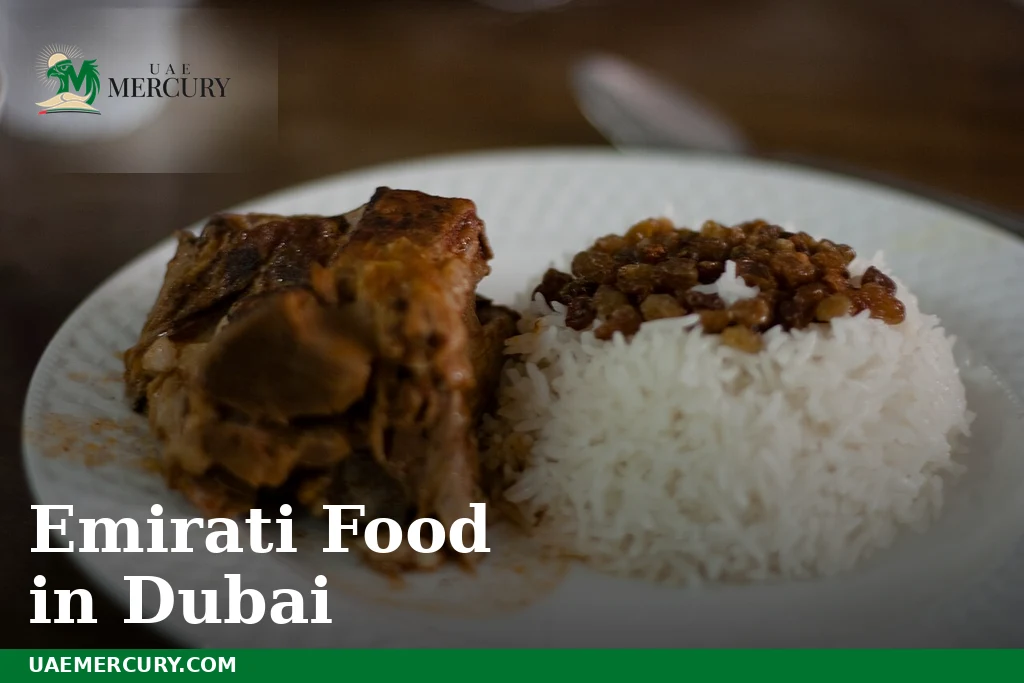
Emirati food in Dubai is the UAE’s own cuisine — slow-cooked rice and meat dishes, wheat porridge, bread stews and date sweets — and it is much harder to find than the city’s Levantine, Indian and international restaurants. Most Emirati cooking happens at home, and only a handful of dedicated restaurants serve it. This short guide covers what to try first, where to eat it, what it costs, and the Dubai Mall options, so you can taste the real thing on a single visit.
What Is Emirati Food?
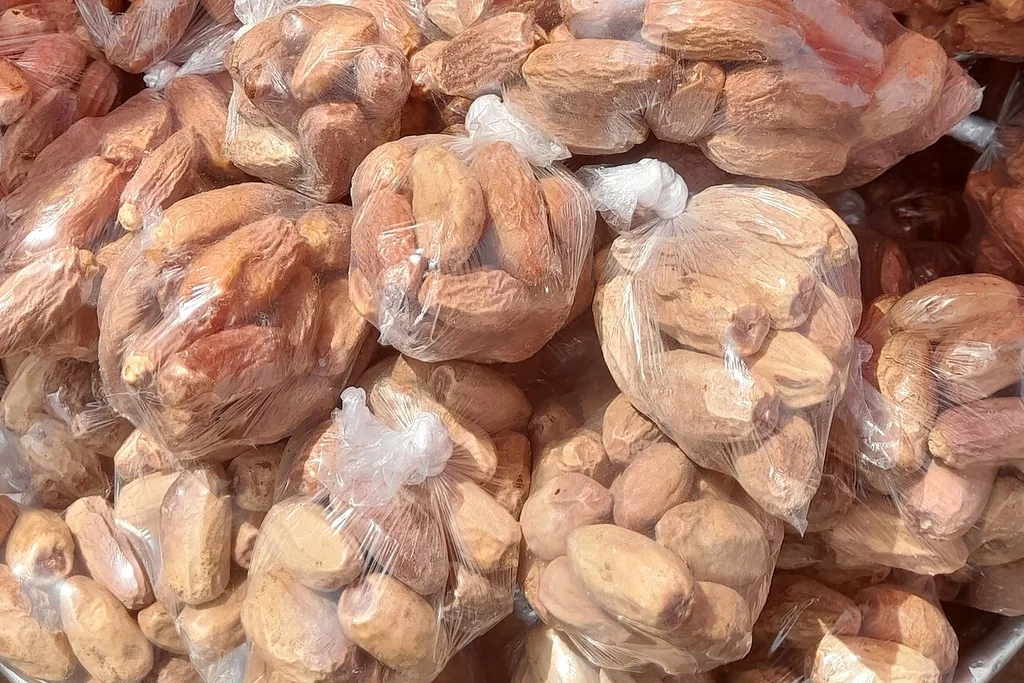
Emirati food is the traditional cuisine of the UAE, shaped by Bedouin desert life, coastal fishing and the Indian Ocean spice trade. The signature flavours are saffron, cardamom, turmeric, dried black lime (loomi) and the bezar spice blend, and every meal starts the same way: Arabic coffee (gahwa) served unsweetened in small cups, with dates. Dishes are designed to be shared from a communal tray, and — unlike the mezze spreads many visitors expect — an authentic Emirati menu has no hummus and tabbouleh. If you want the full version, read our Emirati Food Guide, which covers every dish and restaurant in detail.
Famous Emirati Food to Try First
Five dishes cover the essentials. Start with machboos (AED 62–85) — spiced basmati rice with lamb, chicken or fish, flavoured with loomi, saffron and cardamom, and widely regarded as the UAE’s national dish. Then harees (AED 47–65) — wheat and meat slow-cooked for 6–8 hours into a smooth porridge with ghee, a Ramadan and wedding staple that is UNESCO-listed. For breakfast, balaleet (AED 28–42) is sweet saffron vermicelli topped with a savoury omelette, and chebab (AED 28–34) are saffron pancakes with cream cheese and honey. Finish with luqaimat (AED 15–45) — crisp fried dough balls in date syrup, the Ramadan dessert favourite. Two more to know by name: thareed, a meat stew served over flatbread that soaks up the broth, and saloona, the everyday tomato-based stew — no standalone menu price could be verified for either, so expect them to be priced with the mains.
Where to Eat Emirati Food in Dubai
Best Emirati Food Restaurant Dubai Has to Offer
The restaurants below are the dedicated Emirati options — not generic Middle Eastern restaurants. Start with Al Fanar for the full menu, or Arabian Tea House for breakfast.
Al Fanar — the first-timer’s pick
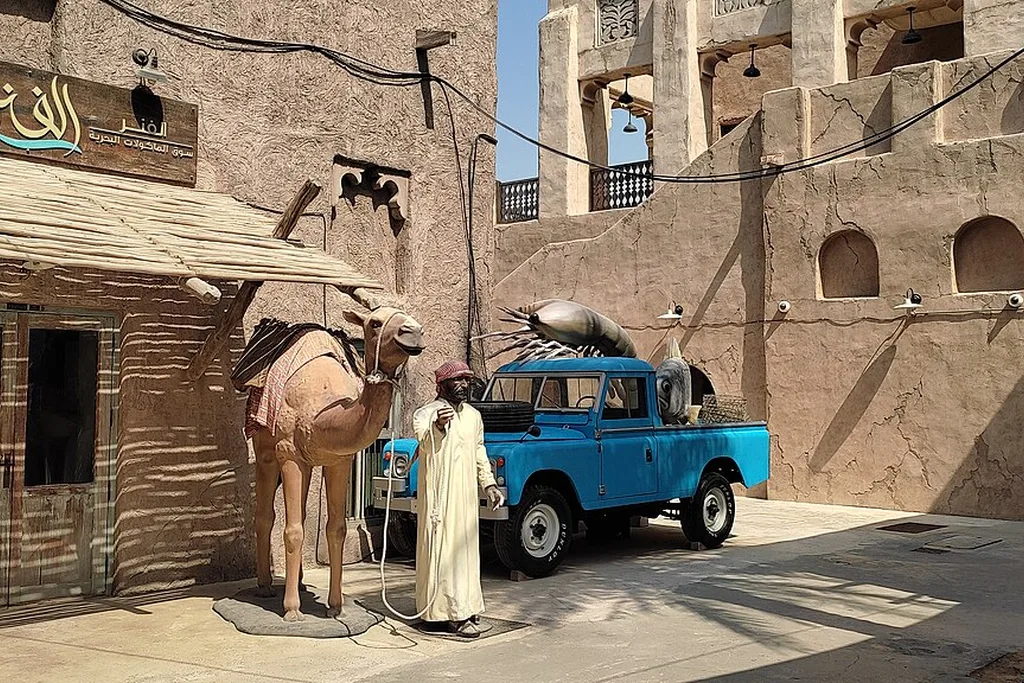
Al Fanar at Al Seef (Al Hamriya) and Dubai Festival City Mall is Dubai’s first dedicated Emirati restaurant (founded 2011, Michelin Guide-listed), set in a recreated 1960s Fujairah courtyard. Order the machboos (AED 62), harees (around AED 65) and luqaimat (AED 28). Budget around AED 100–150 per person.
Logma — the casual breakfast stop
Logma at BoxPark and Dubai Mall (Fashion Avenue, Level 3, fountain view) is a Khaleeji-Californian café and the easiest place for Emirati breakfast: chebab and khameer at AED 30 each, karak at AED 16, and a breakfast tray around AED 95. Meals run about AED 50 per person. For the full karak crawl, see our best karak chai in Dubai guide.
Arabian Tea House and Al Khayma — the Al Fahidi pair
Both sit in the Al Fahidi Historical Neighbourhood in Bur Dubai. Arabian Tea House (open since 1997) does the best traditional breakfast — its Special Emirati Breakfast Tray is around AED 87–89, with balaleet at AED 36 and chebab at AED 34. Al Khayma, in a restored coral-stone house with majlis seating, does a breakfast tray at AED 99, meat machboos at AED 79 and luqaimat at AED 15. A meal for two runs about AED 200–250.
Siraj — the special-occasion pick
Siraj at Souk Al Bahar in Downtown Dubai is modern fine-dining Emirati-Levantine with a Burj Khalifa view: lamb haris AED 58, shrimp majboos AED 86, meat margooga AED 69. Expect around AED 200 per person. One honest note: some reviewers call it Lebanese-leaning rather than purely Emirati — the food is excellent either way.
Emirati Food Dubai Mall: Ana Restaurant and Logma
Yes — Dubai Mall has Emirati food. Ana Restaurant (First Floor, Waterfall Area) is the mall’s only dedicated Emirati restaurant, with an Emirati platter, Mbahar chicken and lamb, harees and khameer; mains run AED 45–90. The second option is Logma Dubai Mall (Fashion Avenue, Level 3), serving chebab and khameer at AED 30 with a fountain view. If you are already at the mall for the day, Ana is the convenient pick; if you want the better breakfast, Logma wins.
Traditional Emirati Food in Dubai: Breakfast vs Dinner
The split is simple. Breakfast is sweet and bread-based: balaleet, chebab, khameer, regag flatbread and dango, always with karak — best at Arabian Tea House or Logma, before 11:00 AM. Lunch and dinner are the heavy one-pot dishes: machboos, harees, thareed, saloona, grills and seafood such as jesheed and hammour machboos, with ghuzi (whole slow-roasted lamb over rice) reserved for celebrations. Harees, luqaimat and dates dominate Ramadan iftars, while thareed and saloona are everyday home food.
How Much Does Emirati Food Cost?
A full sit-down meal is typically AED 80–120 per person. A single main like machboos costs AED 62–85, breakfast dishes AED 28–36, a street snack of luqaimat and karak AED 15–30, and fine dining AED 200+ per person. Catered Emirati buffets run AED 150–215 per person. In short, Emirati food is not expensive by Dubai standards — the hard part is finding it, not affording it.