








Dubai has more than 40 hospitals: six government hospitals run by Dubai Health and dozens of private hospitals. The best-known names are Rashid Hospital for trauma, American Hospital Dubai for private care, and Mediclinic City Hospital. GP visits cost about AED 150–500; specialist visits, about AED 300–1,500.
This guide lists the main hospitals in Dubai by area, compares government and private hospitals, and gives indicative costs. Confirm prices with the hospital.
Hospitals in Dubai at a Glance
The Dubai Health Authority (DHA) licenses every hospital and doctor in the emirate. Government hospitals are run by Dubai Health, while private hospitals belong to groups such as Mediclinic, NMC, Aster, and Saudi German. Most major hospitals hold Joint Commission International (JCI) accreditation.
Health insurance is mandatory for residents, and most employers provide a basic plan. Tourists are not covered locally, so travel insurance matters. In a genuine emergency, hospitals must stabilise you first, whatever your insurance status.
Government Hospitals in Dubai
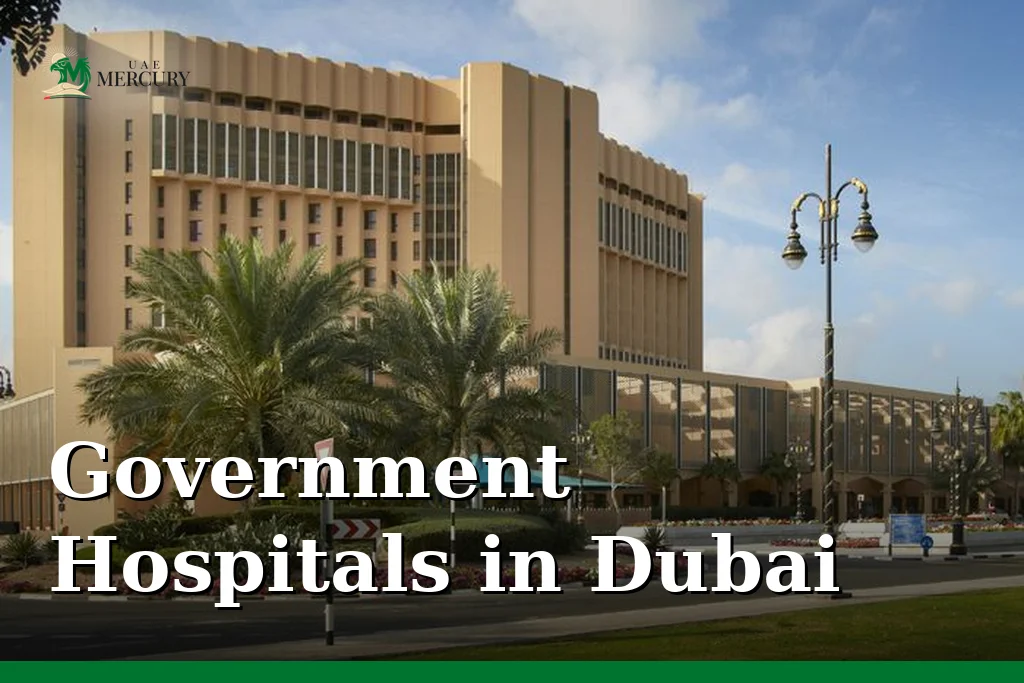
Dubai’s government hospitals are run by Dubai Health and open to all residents, including expats. UAE nationals receive free care, while expats pay lower standard tariffs. All Dubai Health hospitals share one helpline: 800 60.
Rashid Hospital in Umm Hurair is the emirate’s main trauma centre, with around 786 beds and a 24-hour emergency department. Dubai Hospital in Deira is a large tertiary hospital known for cardiology, surgery, and diabetes care.
Latifa Hospital in Al Jaddaf is the main public hospital for women and children, with a large neonatal intensive care unit. Al Jalila Children’s Specialty Hospital, also in Al Jaddaf, is Dubai’s first public hospital dedicated only to children.
Hatta Hospital serves the Hatta area, about 125 km from central Dubai. For a fuller comparison, see our guide to Government Hospitals in Dubai.

Hospitals in Dubai by Area
Where you live shapes which hospital you will use most. The table below lists the main hospitals in Dubai by area, with type and speciality. Most large hospitals in it run 24-hour emergency departments.
| Hospital | Area | Type | Key Speciality |
|---|---|---|---|
| Dubai Hospital | Deira | Government | Cardiology, surgery |
| Canadian Specialist Hospital | Deira (Abu Hail) | Private | Cardiology, neurology |
| Rashid Hospital | Bur Dubai (Umm Hurair) | Government | Trauma, emergency |
| Latifa Hospital | Bur Dubai (Al Jaddaf) | Government | Maternity, children |
| Aster Hospital Mankhool | Bur Dubai (Mankhool) | Private | General medicine, paediatrics |
| American Hospital Dubai | Oud Metha | Private | Oncology, cardiology |
| Emirates Hospital Jumeirah | Jumeirah | Private | Surgery, dermatology |
| Medcare Hospital | Al Safa | Private | Orthopaedics, maternity |
| Al Zahra Hospital Dubai | Al Barsha | Private | Internal medicine, ENT |
| Saudi German Hospital Dubai | Al Barsha 3 | Private | Neurosurgery, orthopaedics |
| Mediclinic Parkview Hospital | Al Barsha South | Private | Maternity, paediatrics |
| Mediclinic City Hospital | Dubai Healthcare City | Private | Cardiology, oncology |
| King’s College Hospital Dubai | Dubai Hills | Private | Liver care, maternity |
| NMC Royal Hospital | Dubai Investments Park | Private | Paediatrics, obstetrics |
| Aster Hospital Al Qusais | Al Qusais | Private | General medicine, emergency |
| Zulekha Hospital Dubai | Al Nahda | Private | Cardiology, oncology |
| Fakeeh University Hospital | Dubai Silicon Oasis | Private | Robotic surgery, stroke care |
| Al Jalila Children’s Hospital | Al Jaddaf | Government | Paediatric specialty care |
Hospitals in Deira, Dubai
Deira is served by Dubai Hospital on Al Khaleej Road and Canadian Specialist Hospital in Abu Hail. Both are near metro stations, and Dubai Hospital’s emergency department runs 24 hours. Zulekha Hospital and Aster Hospital Al Qusais are just across the border in Al Nahda.
Hospitals in Bur Dubai
Bur Dubai holds three main government hospitals: Rashid, Latifa, and Al Jalila Children’s. Aster Hospital Mankhool is the area’s best-known private hospital, popular with families in Karama and Mankhool.
Hospitals in Jumeirah, Dubai
Emirates Hospital Jumeirah on Jumeirah Beach Road is a 100-bed JCI-accredited private hospital with more than 40 specialties. Medcare Hospital in nearby Al Safa is another strong option, especially for orthopaedics and maternity care.
Hospitals in Al Barsha, Dubai
Saudi German Hospital Dubai in Al Barsha 3 is a 300-bed private hospital with one of the largest private emergency departments in the UAE. Al Zahra Hospital Dubai and Mediclinic Parkview Hospital cover maternity, paediatrics, and family medicine.
Hospitals in Dubai Healthcare City
Mediclinic City Hospital is the flagship of Dubai Healthcare City, a free zone built around medical care. The 280-bed hospital has held JCI accreditation since 2010 and is known for cardiac care and women’s health. Dr Sulaiman Al Habib Hospital is also there.
Hospitals in Dubai Hills and Mirdif
King’s College Hospital Dubai in Dubai Hills brings UK teaching-hospital standards, with leading liver, orthopaedic, and maternity services. Mirdif residents use HMS Mirdif Hospital and Medcare Medical Centre for everyday care, with Dubai Hospital and Rashid Hospital nearby.
Hospitals in Al Qusais and International City
Aster Hospital Al Qusais is a 150-bed private hospital with a 24-hour emergency department, serving Al Qusais, Al Nahda, and Muhaisnah. Zulekha Hospital Dubai is nearby. International City residents use Aster Hospital Al Qusais or NMC Specialty Hospital Al Nahda, both within a 15-minute drive.
Top Hospitals in Dubai
There is no single best hospital in Dubai for everyone, because the right choice depends on your medical need. American Hospital Dubai is the most recommended private hospital, with JCI accreditation, Mayo Clinic Care Network membership, and leading oncology and cardiology centres.
American Hospital Dubai was founded in 1996 and was the first hospital in the Middle East to receive JCI accreditation. For emergencies, Rashid Hospital is the first choice for major trauma. For heart care, Mediclinic City Hospital has one of the strongest cardiac programmes.
For maternity, Latifa Hospital leads the public sector, while American Hospital Dubai and King’s College Hospital Dubai lead the private sector. Newsweek’s World’s Best Hospitals 2026 list ranks several Dubai hospitals. See our separate ranking: Best Hospitals in Dubai.
Mental Hospital in Dubai
Dubai’s dedicated mental health hospital is Al Amal Psychiatric Hospital, run by Emirates Health Services. EHS describes it as the first internationally accredited specialist mental health hospital in the Middle East. Its clinics cover adult, child and adolescent, older adult, addiction, intellectual disability, and forensic psychiatry.
Al Amal serves Dubai and the Northern Emirates. Appointments usually need a medical referral, a valid Emirates ID, and a health card. Book through the EHS call centre on 800 8877. For urgent support, call the free Itma’en helpline on 800 506 or National Hope on 800 4673.
24-Hour Emergency Hospitals Near Me
Most large hospitals in Dubai run a 24-hour emergency department. The main ones are Rashid Hospital and Dubai Hospital (government), plus American Hospital Dubai, Mediclinic City Hospital, Saudi German Hospital Dubai, Emirates Hospital Jumeirah, and Aster Hospital Al Qusais (private). In a serious emergency, call 998.
For a genuine emergency, go to the nearest capable hospital rather than your usual one. Government emergency departments treat everyone, including tourists and uninsured patients, and bill afterwards at standard tariffs. Keep your insurance card and Emirates ID with you.
How Much Do Hospitals in Dubai Cost?
Hospital costs in Dubai vary widely between government and private hospitals. The ranges below are indicative only, based on guides checked in November 2026. Always confirm the exact fee with the hospital before your visit.
| Service | Government | Private |
|---|---|---|
| GP consultation | AED 100–500 | AED 150–500 |
| Specialist consultation | AED 200–500 | AED 300–1,500 |
| Emergency visit (basic) | AED 200–600 | AED 500–1,500 |
| Blood test panel (basic) | AED 150–400 | AED 250–600 |
| X-ray (single) | AED 150–350 | AED 200–500 |
| MRI scan | AED 1,500–3,500 | AED 2,500–5,500 |
Without insurance, a private hospital visit usually costs several times more than the same visit at a government hospital. With insurance, check whether the hospital and the department are in your network. An out-of-network visit can leave the full bill with you.
Doctors and nurses in Dubai earn competitive tax-free salaries — see our guides to doctor salaries in the UAE and nurse salaries in Dubai.
How to Choose the Right Hospital in Dubai
Start with your need: emergency, maternity, a named specialist, or routine care. Then check your insurance network, because that decides which hospitals you can use without paying the full bill. Next, match the hospital’s strength to your need: Rashid for trauma, Latifa for maternity.
Finally, check the hospital’s DHA licence on dha.gov.ae and look for JCI accreditation as an extra quality marker. Read recent patient reviews, but weigh them against the hospital’s specialty record. For planned treatment, call the hospital first and ask for a written cost estimate.
Disclaimer: All prices here are indicative only and may change. Confirm fees and insurance coverage with the hospital before you visit. This article is cost and guide information only, not medical advice, and offers no diagnosis or treatment recommendation. For health concerns, see a licensed doctor.