









Ramadan 2026 in Abu Dhabi ran from February 18 to March 19 — 30 days of fasting from dawn to sunset, nightly Taraweeh prayers, and the city’s famous iftar gatherings. This guide keeps the complete Abu Dhabi timetable: suhoor and iftar times through the month, Taraweeh, Laylat al-Qadr, and how Ramadan changes daily life in the capital.
Watch: 5-Star Iftar at Sharjah Grand Mosque 2026
The atmosphere of a mass UAE iftar gathering in Ramadan 2026.
Dates are subject to moon sighting — the UAE Moon-Sighting Committee confirms the start and end of Ramadan each year, so dates can shift by a day.
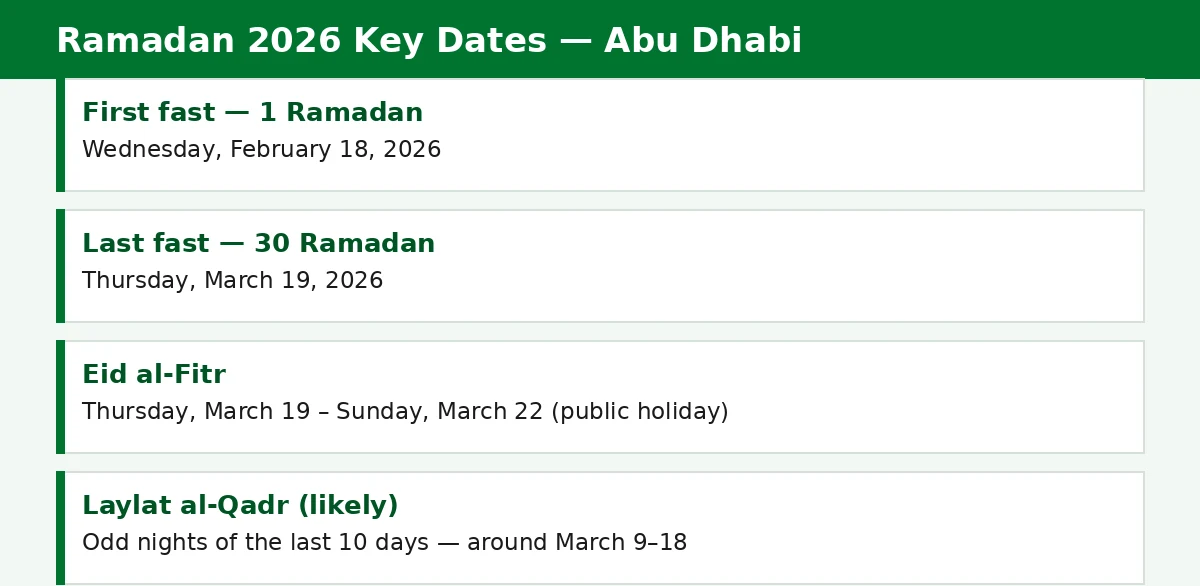
Ramadan 2026 Key Dates — Abu Dhabi
| Event | Date (2026) |
|---|---|
| First fast (1 Ramadan) | Wednesday, February 18 |
| Last fast (30 Ramadan) | Thursday, March 19 |
| Eid al-Fitr | Thursday, March 19 – Sunday, March 22 (public holiday) |
| Laylat al-Qadr (likely) | Odd nights of the last 10 days — around March 9–18 |
Because Ramadan 2026 fell in late winter, fasting hours were among the shortest of the annual cycle — roughly 12.5 to 13.5 hours a day, far less than the 15+ hours of summer Ramadans.
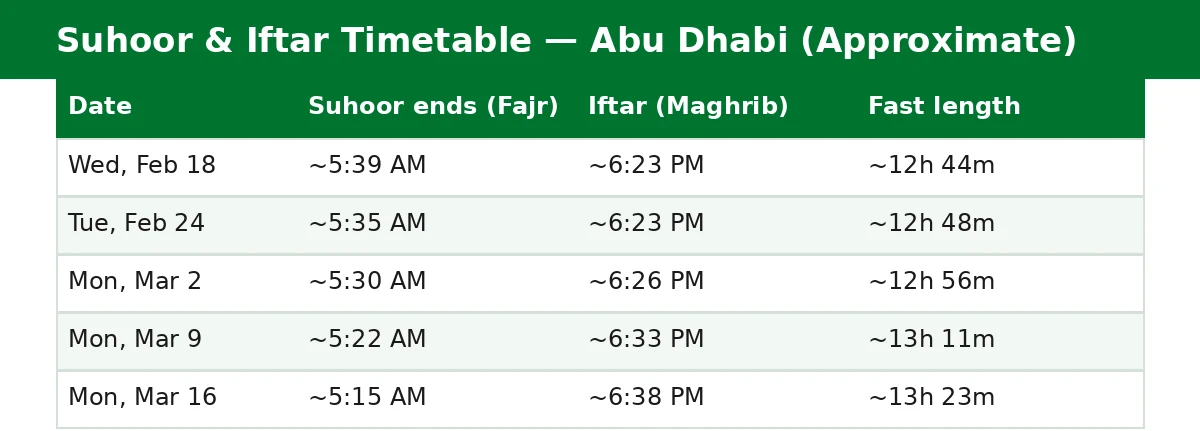
Suhoor & Iftar Timetable — Abu Dhabi (Approximate)
Suhoor ends at the Fajr athan (Imsak is observed about 10 minutes before Fajr in UAE practice); iftar begins at the Maghrib athan. Times below are approximate for Abu Dhabi, derived from the official UAE calculation with the capital’s ~5-minute offset from Dubai. Always confirm the day’s exact times with your mosque.
| Date | Suhoor ends (Fajr) | Iftar (Maghrib) | Fast length |
|---|---|---|---|
| Wed, Feb 18 | ~5:39 AM | ~6:23 PM | ~12h 44m |
| Tue, Feb 24 | ~5:35 AM | ~6:23 PM | ~12h 48m |
| Mon, Mar 2 | ~5:30 AM | ~6:26 PM | ~12h 56m |
| Mon, Mar 9 | ~5:22 AM | ~6:33 PM | ~13h 11m |
| Mon, Mar 16 | ~5:15 AM | ~6:38 PM | ~13h 23m |
Notice the pattern: suhoor creeps earlier by about a minute a day while iftar moves later — the fast lengthens by roughly 40 minutes across the month.
Taraweeh Prayers in Abu Dhabi
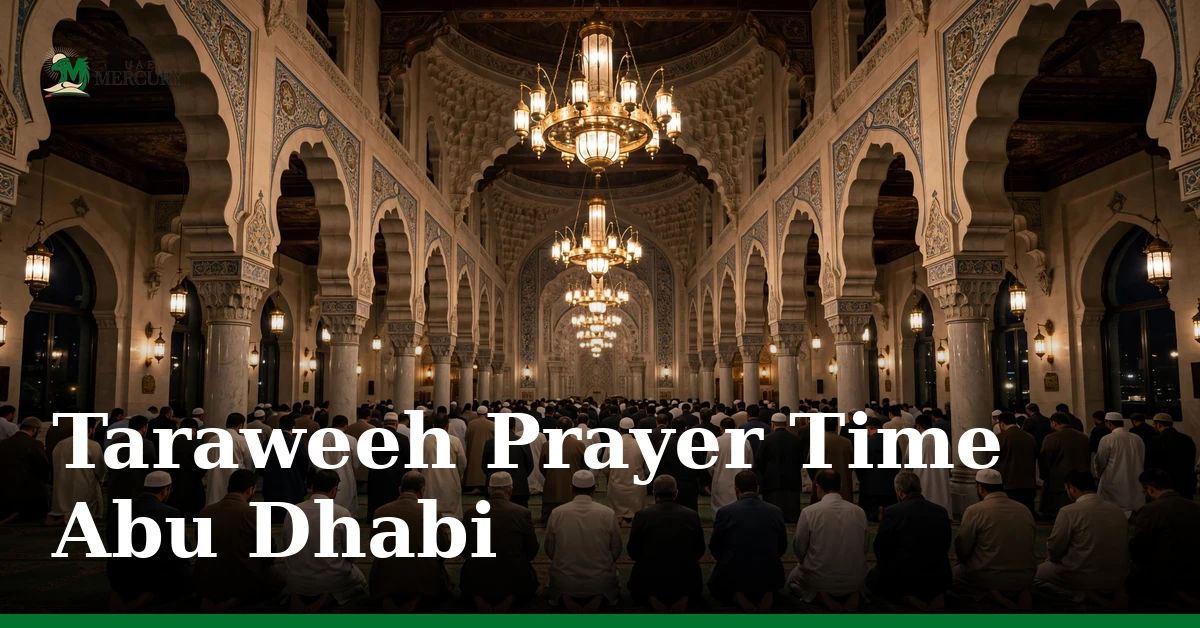
Taraweeh — the special night prayers of Ramadan — begin about 10–15 minutes after the Isha athan in every mosque. Through Ramadan 2026, Isha in Abu Dhabi fell around 7:35–7:50 PM, so Taraweeh started roughly 7:50–8:05 PM depending on the night and mosque.
The grandest Taraweeh gatherings are at the Sheikh Zayed Grand Mosque, which draws enormous crowds every night of Ramadan. Arrive early for a spot inside. See our Taraweeh prayer guide for the full picture.
The Five Daily Prayers Don’t Change
A common misconception: the five daily prayers follow the exact same sun-based schedule during Ramadan. What changes is their importance in your day — Fajr now ends suhoor, Maghrib now breaks the fast. For the daily timetable see Abu Dhabi prayer times and the method behind it in how prayer times are calculated.
How Ramadan Changes Daily Life in Abu Dhabi
- Working hours shrink — public and private sector hours are reduced during Ramadan (typically by about two hours); check your employer’s official announcement
- The iftar cannon — a traditional cannon fires at sunset to announce iftar, a sound many residents set their evening by
- Iftar tents and majlises — hotels and mosques across the city host free or ticketed iftar meals; mosque iftars welcome everyone
- Malls and restaurants — daytime dining goes quiet; evenings come alive after iftar, with many outlets open late into the night
- Suhoor — the pre-dawn meal; many hotels serve suhoor buffets from around 9–10 PM until the early hours
- Traffic — expect heavy congestion in the hour before iftar and lighter roads during Taraweeh
- Etiquette — eating, drinking or smoking in public during fasting hours is disrespectful; dress even more modestly than usual
Laylat al-Qadr — The Night of Decree
Muslims seek Laylat al-Qadr — the holiest night of the year, “better than a thousand months” — on the odd nights of the last ten days of Ramadan (the 21st, 23rd, 25th, 27th and 29th nights). In 2026 these fell around March 9–18. Mosques stay open through the night, with extended prayers (Qiyam al-Layl) and many worshippers performing i’tikaf (spiritual retreat) in the mosque.
Eid al-Fitr 2026
Ramadan ended with Eid al-Fitr (March 19–22, 2026), a four-day public holiday. The Eid prayer is held about 15–20 minutes after sunrise — the main congregation at the Sheikh Zayed Grand Mosque, with dozens of other mosques and musallas across the city. See Eid prayer times and where to pray Eid in Abu Dhabi.
Tips for a Smooth Ramadan in Abu Dhabi
- Set two alarms: one for suhoor (at least 45 minutes before Fajr) and a backup
- Hydrate at suhoor — water, laban and fruit beat coffee for the long day
- Break fast lightly — dates and water first, then Maghrib prayer, then the meal
- Plan around prayer times — government offices and many services pause for prayers
- Book iftars early — popular hotel iftars sell out, especially on weekends
- Give zakat al-fitr before the Eid prayer — it must be paid before the congregation prays
Suhoor and Iftar: Eating Well Through the Month
The fast is much easier with the right food strategy:
- Suhoor: eat slow-release foods — oats, whole grains, eggs, yoghurt, dates and plenty of water. Avoid very salty foods (they drive thirst) and excess caffeine. Finish eating a few minutes before the Fajr athan, not at it
- Iftar: break with dates and water (sunnah), pray Maghrib, then eat a balanced meal. Going straight to a heavy feast causes the classic post-iftar slump
- Hydration: aim for 2–3 litres between iftar and suhoor; fruit, soup and laban all count
- Hotel iftars: Abu Dhabi’s hotels compete on lavish iftar buffets — book ahead, especially Thursday/Friday nights
- Mosque iftars: free community iftars at mosques welcome everyone and are often the warmest atmosphere in the city
The Last Ten Nights
The final third of Ramadan (in 2026, roughly March 9–18) is the month’s spiritual peak. Mosques extend their night prayers (Qiyam al-Layl), many worshippers perform i’tikaf — secluding themselves in the mosque for the last ten days — and the search for Laylat al-Qadr intensifies on the odd nights. Even if you can’t attend every night, the 27th night (around March 15, 2026) traditionally draws the largest congregations of the year.
Zakat al-Fitr: Don’t Leave It Late
Zakat al-Fitr — the obligatory charity at the end of Ramadan — must be paid before the Eid prayer, ideally in the last day or two of Ramadan. In the UAE it’s typically given as a fixed cash amount per person (announced by Islamic authorities each year) through mosques and licensed charities. Pay it early in the final week and it’s done; leave it to Eid morning and you risk missing the deadline.
Preparing for Eid
The last days of Ramadan blend worship with preparation: new clothes (especially for children), Eidiya cash gifts, sweets and maamoul baking, and deep-cleaning the house. Most residents take the Eid holidays (March 19–22, 2026) for family visits — book any travel early, as flights and staycations sell out. The Eid prayer itself (~15–20 minutes after sunrise on March 19) is the month’s closing ceremony; see Eid prayer times and where to pray Eid in Abu Dhabi.
Ramadan for Non-Fasting Residents and Visitors
If you’re not fasting, Ramadan in Abu Dhabi is still deeply enjoyable — with a few adjustments:
- Eating during the day: eat discreetly — at home, in your office pantry, or in restaurants’ screened daytime areas. Avoid eating, drinking or smoking openly in public out of respect
- Greetings: “Ramadan Kareem” (generous Ramadan) is the standard greeting; “Ramadan Mubarak” works too
- Accept iftar invitations: being invited to iftar is a genuine honour — accept when you can, bring nothing but gratitude (dates or sweets are a nice touch)
- Dress: modesty expectations rise in Ramadan; cover shoulders and knees in public
- Nightlife flips: the city sleeps late and wakes late — malls buzz at midnight, and suhoor tents run into the early hours. Lean into it
Working Hours and Daily Rhythm
Ramadan compresses the working day: public and private sector hours are officially reduced (typically by about two hours), schools shorten their days, and the whole city shifts later — heavy traffic before iftar, quiet streets during Taraweeh, lively nights after. Plan meetings for mid-morning, avoid scheduling anything in the last hour before Maghrib, and expect slower response times in the final week as Eid approaches.
Frequently Asked Questions
When was Ramadan 2026 in Abu Dhabi?
Ramadan 2026 ran from Wednesday, February 18 to Thursday, March 19, 2026, followed by Eid al-Fitr (March 19–22). Dates are subject to moon sighting.
What time was iftar in Abu Dhabi during Ramadan 2026?
Iftar (Maghrib) moved from about 6:23 PM at the start of the month to about 6:38 PM by the end. Exact times shifted daily — always confirm with your mosque.
What time did suhoor end in Abu Dhabi in Ramadan 2026?
Suhoor ended at the Fajr athan, moving from about 5:39 AM on February 18 to about 5:15 AM by mid-March. Imsak (stopping eating as precaution) is about 10 minutes before Fajr.
How long was the fast in Ramadan 2026?
About 12 hours 44 minutes at the start, lengthening to about 13 hours 23 minutes by the end — short by UAE standards, since Ramadan fell in late winter.
What time was Taraweeh in Abu Dhabi in Ramadan 2026?
Taraweeh began about 10–15 minutes after the Isha athan — roughly 7:50–8:05 PM through the month. The largest gatherings were at the Sheikh Zayed Grand Mosque.
When was Laylat al-Qadr in Ramadan 2026?
Laylat al-Qadr is sought on the odd nights of the last ten days of Ramadan — in 2026, around March 9–18. Mosques held extended night prayers throughout.
Do prayer times change during Ramadan?
No — the five daily prayers follow the same sun-based schedule. What changes is their role: Fajr ends suhoor and Maghrib breaks the fast, plus Taraweeh is added after Isha.
Can non-Muslims eat in public during Ramadan in Abu Dhabi?
It is disrespectful to eat, drink or smoke in public during fasting hours. Most restaurants operate with discretion during the day and come alive after iftar.
When was Eid al-Fitr 2026 in Abu Dhabi?
Eid al-Fitr 2026 was March 19–22 (public holiday), with the Eid prayer held about 15–20 minutes after sunrise on the first morning.
Last updated: October 2026. Ramadan dates and times are subject to moon sighting — this timetable is approximate; confirm daily times with your mosque.