
A bed space in Dubai typically costs AED 330 to AED 1,100 a month, a partition room runs AED 900 to AED 2,200, and a private room in a shared flat starts around AED 2,200 — all depending on the area. Deira, Al Quoz and International City are the cheapest areas, while Dubai Marina and Downtown cost two to three times more. But price is no longer the only thing that matters: since 26 August 2026, Dubai’s Law No. 4 of 2026 has made shared housing a permit-only activity, with fines of AED 500 to AED 500,000 — up to AED 1 million for repeat offences. Here is what each option really costs, what the new law changes, and how to rent a bed without getting evicted or fined.
What “Bed Space”, “Partition” and “Private Room” Actually Mean in Dubai
Dubai’s shared-rental market uses three terms that mean very different things — and the new law treats them differently too.
- Bed space: one bed in a shared room, often with 4 to 8 people (sometimes bunks). Kitchen, bathroom and living areas are shared, and utilities — DEWA, Wi-Fi, air conditioning — are usually included. The cheapest way to live in Dubai, and the one the new law regulates most closely.
- Partition: a section of a room divided off with boards to create a semi-private sleeping space for one or two people. Costs more than a bed space and offers more privacy — but the partition itself must meet fire-safety and build standards.
- Private room: a full lockable bedroom inside a shared apartment, sometimes with an attached bathroom. You share the kitchen and living room with the other tenants. Usually costs double or more than a bed space.
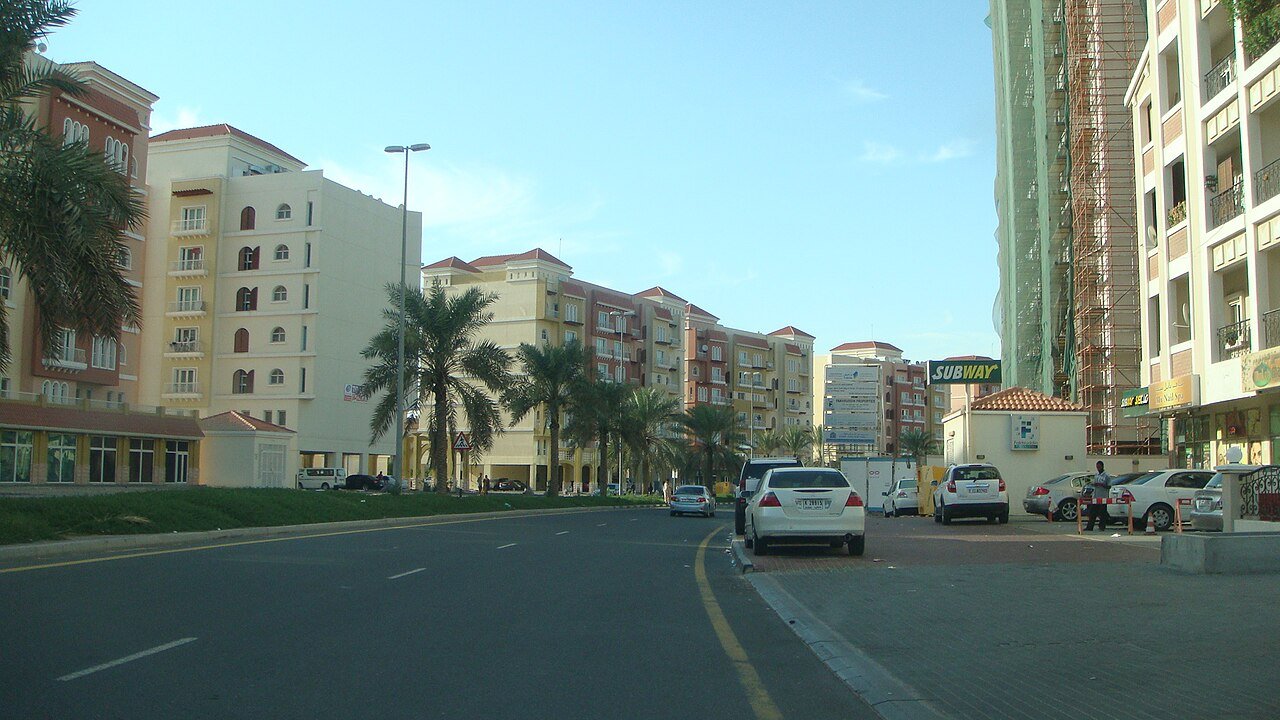
Bed Space in Dubai Price: 2026 Monthly Rates by Area
The table below shows typical 2026 monthly bed-space ranges from active listings and market surveys; most advertised prices include utilities.
| Area | Typical bed space price (AED/month) | Who it suits |
|---|---|---|
| Deira (Al Rigga, Naif, Al Muraqqabat) | 450 – 900 | Cheapest; near metro and old markets |
| Bur Dubai (Al Raffa, Al Fahidi) | 600 – 1,000 | Near Deira and Sheikh Zayed Road jobs |
| Al Quoz | 500 – 800 | Near industrial zones and warehouses |
| Karama | 700 – 1,100 | Popular with expats and retail workers |
| Al Nahda | 500 – 1,100 | Near the Sharjah border; metro access |
| International City | 500 – 850 | Budget hub; large South Asian community |
| Dubai Marina / JBR | 1,000 – 2,000 | Premium areas; expect small, crowded rooms |
These ranges reflect 2026 listings across the city; most advertised prices include utilities. Fewer occupants, metro proximity and furnished rooms all push the price up — a bed in a three-person room near a metro station can cost twice what a bunk in a six-person room in the same neighbourhood costs.
Bed Space in Low Price in Dubai: the Cheapest Areas
If your only goal is the lowest possible monthly rent, the cheapest bed spaces in Dubai sit in Deira and International City, with basic listings starting around AED 330–500 a month in areas like Naif, Al Murar and Al Rigga. Al Quoz and Al Nahda are close behind. Three things to know about the cheapest end of the market: the rooms are usually the most crowded (6–10 occupants), and the cheapest rooms are also the most likely to be illegal partitions or overcrowded units. A bed at AED 330 that ends in eviction is not a bargain.
Single Bed Space Price in Dubai: What It Costs
A single bed space — one bed in a room with only one or two other people, or an “executive” setup with your own wardrobe and storage — costs notably more than a standard shared bed. Expect AED 1,000 to AED 1,450 a month in Bur Dubai or Karama, typically with DEWA, Wi-Fi and sometimes an attached bathroom included. Rule of thumb: the fewer people sharing your room, the closer the price gets to a partition.
How Much Does a Partition Room Cost in Dubai?
A partition room in Dubai typically costs AED 900 to AED 2,200 a month, depending on the area and setup:
- Basic partition in Deira or Bur Dubai: AED 900 – 1,300 for a standard furnished partition with a shared bathroom.
- Partition with attached bathroom or balcony: AED 1,300 – 1,600, popular with couples (some listings in Al Raffa and Al Rigga advertise at AED 899 – 1,600).
- Executive partition: AED 1,600 – 2,500 in central areas.
Remember: since the 2026 law, a partition that is not approved — wooden or non-fire-rated gypsum boards, partitions that block fire exits, or rooms carved out of balconies and kitchens — is a violation, no matter how reasonable the rent looks.
How Much Does a Private Room Cost in Dubai?
- Deira / International City: AED 1,000 – 3,500 for standard and master rooms, depending on bathroom and furnishing.
- Bur Dubai / Karama / Al Nahda: AED 2,200 – 4,500 for standard to master rooms.
- Al Barsha / Barsha Heights: AED 2,200 – 4,500, often furnished with gym and pool access.
- Dubai Marina / JBR / Downtown: AED 2,700 – 7,000, with executive rooms in premium towers reaching the top of the range.

Dubai Law No. 4 of 2026: What the New Shared Housing Law Actually Says
Dubai’s Law No. 4 of 2026 on the Regulation of Occupancy and Management of Shared Housing came into force on 26 August 2026 (180 days after publication in the Official Gazette), and it is the first law to give shared housing a proper permit system. The key points:
- A permit is mandatory. No residential unit may be used for shared housing without a permit from Dubai Municipality, issued in coordination with the Dubai Land Department.
- Only owners or authorised establishments may lease shared housing. A tenant who rents a flat and then sublets rooms, partitions or bed spaces to others is explicitly prohibited. The old “one master tenant, ten partitions” model no longer survives this law.
- Minimum space per resident. Around 5 square metres of net living area per person, counted only on genuine living space — bedrooms and living rooms. Kitchens, bathrooms, balconies, corridors, storage rooms and parking areas do not count and can never be used as sleeping space.
- Partition standards. Timber and non-fire-rated gypsum board partitions are specifically prohibited, as is anything that blocks the route from a bed to the front door or fire stairs.
- Existing operators get one year to comply — until 26 August 2027.
Note the split: the fines land on whoever rents the unit out — the operator — while the tenant risks eviction and utility disconnection.
Fines and Penalties: Who Gets Fined and How Much
Violations of the shared housing rules carry fines ranging from AED 500 to AED 500,000. If the same offence is repeated within one year, the penalty can be doubled, up to a maximum of AED 1 million. Beyond fines, the authorities can:
- suspend an operator for up to six months, revoke permits, or coordinate cancellation of a trade licence;
- disconnect utilities from non-compliant properties until violations are fixed;
- refuse registration of tenancy or management contracts for offending units; and
- evict occupants through a decision of the execution judge.
Occupants caught in an illegal setup face eviction — authorities may give residents time to arrange alternative accommodation — and can face visa or residency complications. Enforcement is not theoretical: authorities ran inspection campaigns through 2025 in Al Rigga, Al Muraqqabat, Al Barsha, Al Satwa and Al Raffa, and in August 2026 tenants were evicted from the Toyota Building in Naif after flats housing as many as 15 people were found.
How to Check If Your Rental Is Legal: 5 Steps
- Ask who the landlord is. Under the law, only the property owner or a licensed, authorised establishment may lease shared housing to you. If the person showing you the room is a tenant subletting, walk away — that arrangement is explicitly prohibited.
- Ask to see the shared-housing permit. The unit needs a permit from Dubai Municipality. An evasive answer is a red flag.
- Count the heads. Divide the bedrooms and living rooms by roughly 5 square metres per person. If 12 people are sleeping in a 2-bedroom flat, it cannot be compliant.
- Look at the partitions. Wooden or thin gypsum-board dividers, rooms carved out of the balcony or kitchen, or beds blocking the path to the front door all signal a violation. Fire-rated construction and clear escape routes are required.
- Check the tenancy registration. Read our guides on how to register Ejari online and how to register Ejari — and never pay rent without a written receipt or agreement.
Tenant Safety Checklist Before Paying a Deposit
- Get the exact rent, what’s included (DEWA, Wi-Fi, AC, cleaning) and the notice period in writing — even a simple written agreement beats a verbal promise.
- Visit in person at a busy hour. Check ventilation, fire exits, smoke detectors, and that the kitchen and bathrooms are not being used as bedrooms.
- Ask how many people live there and how many bathrooms they share.
- Never pay a full deposit plus advance rent in cash without a receipt. Photograph the room and any existing damage on move-in day.
- Save the operator’s contact details and a copy of any ID or trade licence they show you.
- Remember: operators are the ones fined — but tenants are the ones evicted if a unit is shut down. If a deal looks too cheap for the area, assume risk, not luck.
Budget Alternatives If Bed Spaces Don’t Work for You
If legal bed spaces in your area are too crowded or too expensive, a few alternatives are worth considering. Shared flats with 3–4 people often cost AED 999–1,150 in Deira and offer a calmer setup. Employer staff accommodation in hospitality and retail is usually legal, licensed and free — factor it into job offers. Monthly serviced studios start around AED 4,300–5,250 with utilities and cleaning included, which can beat a private room in the Marina. And if you are relocating to start your own venture, sorting a cheap free zone licence early can help you budget housing alongside business setup costs. Finally, consider Sharjah near the Dubai border (bed spaces from AED 400) — cheaper, with a longer commute.