











Dubai has two seasons, not four: a mild, sunny winter from November to March, and a long hot summer from May to September, with April and October as the shoulders. That single fact decides more about a Dubai trip than any hotel or ticket — it decides whether the city is walked or hidden from. This is Dubai weather by month, with the averages that matter: daytime high, night low, sea temperature and rain, plus an honest verdict on each month.
Pick your month here first, then plan the days with our things to do in Dubai guide and the Dubai itineraries.
Dubai weather by month: the full table
| Month | Day high | Night low | Sea | Rain | Verdict |
|---|---|---|---|---|---|
| January | 24C | 15C | 22C | Some | Coolest month; peak season, perfect outdoors |
| February | 25C | 16C | 22C | Some | Excellent weather, slightly smaller crowds |
| March | 28C | 18C | 23C | Little | Warm days, cool nights; last full winter month |
| April | 33C | 21C | 25C | Little | Shoulder: hot middays begin, mornings still good |
| May | 38C | 25C | 28C | Rare | Summer starts; sightseeing moves indoors at midday |
| June | 40C | 27C | 30C | Rare | Very hot and humid; indoor season |
| July | 41C | 30C | 32C | Rare | Hottest stretch begins; nights stay hot |
| August | 41C | 30C | 34C | Rare | Peak heat and humidity; lowest prices |
| September | 39C | 27C | 32C | Rare | Heat eases slowly at the end of the month |
| October | 35C | 23C | 30C | Rare | Shoulder: evenings return outdoors late month |
| November | 30C | 20C | 27C | Little | Winter arrives; season opens, events begin |
| December | 26C | 17C | 25C | Little | Festive peak: DSF, markets, fullest calendar |
Averages are long-term climate normals for Dubai; any single week can sit a few degrees either side. The pattern, though, is one of the most reliable in world travel: winter is dry and mild, summer is hot and humid, and rain is a minor character in every month.
The best months: November to March
These are the months Dubai is built for. Days sit between 24C and 31C, evenings cool enough for outdoor dining, and the sea stays swimmable from November to May. December is the fullest version — the Shopping Festival, the markets, National Day — at peak prices. January is the coolest and most comfortable. February is the connoisseur’s pick: near-identical weather to January with slightly thinner crowds. March warms up but stays pleasant, and November opens the season with the first events and the flamingos returning to Ras Al Khor.
The shoulder months: April and October
April and October are the value months. Hotels price below the winter peak, the sea is warm — 25C in April, 30C in October — and the days still work if you respect the middle hours. Mornings and evenings outdoors, attractions and malls at midday: in the shoulders, that rhythm gives you a near-winter trip at a summer-adjacent price. October’s second half is when outdoor life restarts; April’s first half is when it winds down.
The summer months: May to September
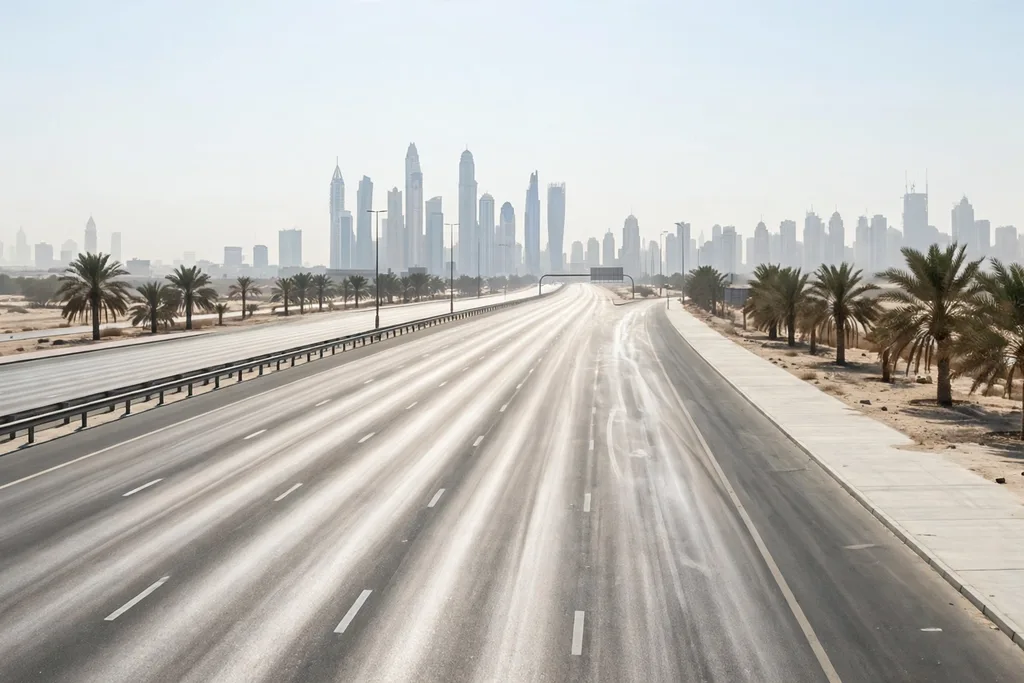
Summer in Dubai is a different city, not a ruined one. Highs run 38C to 41C, humidity makes August nights feel hotter than the number, and the streets empty at midday. What summer gives back: the lowest hotel prices of the year, empty attractions, and an indoor city — ski slopes, aquariums, an indoor rainforest — that was designed for exactly these months. Visit in summer with an indoor-first plan and early starts, and Dubai works. Visit expecting winter’s city, and it does not. Our indoor things to do in Dubai guide is the summer plan.
Sea temperature, honestly
The Gulf is warm almost all year. It bottoms out around 22C in January and February — brisk for the first minute, fine after — and peaks around 33C to 34C in August, when the sea feels like a warm bath and locals swim at night instead. The sweet spot for most visitors is November to May. If swimming matters most to your trip, March, April and November combine warm-enough seas with bearable air.
Rain: the small print

Dubai’s rain falls mostly in January and February, in short bursts that pass within hours, with annual totals so low that a rainy week is genuinely newsworthy. It rarely cancels anything; at most it moves a beach morning to the afternoon. Pack no rain gear beyond what you would wear anyway. The weather risk in Dubai is never rain — it is heat, and only in the months the table marks for it.
What to pack by season
Winter: summer clothes plus a light jacket — evenings, desert nights and the malls’ air conditioning all demand the layer. Shoulders: the same, with the jacket used less. Summer: the lightest clothes you own, a hat, serious sunscreen, and still one layer for the aggressive indoor cooling. In every month, comfortable walking shoes beat everything else in the case; Dubai days are long and mostly on foot.