










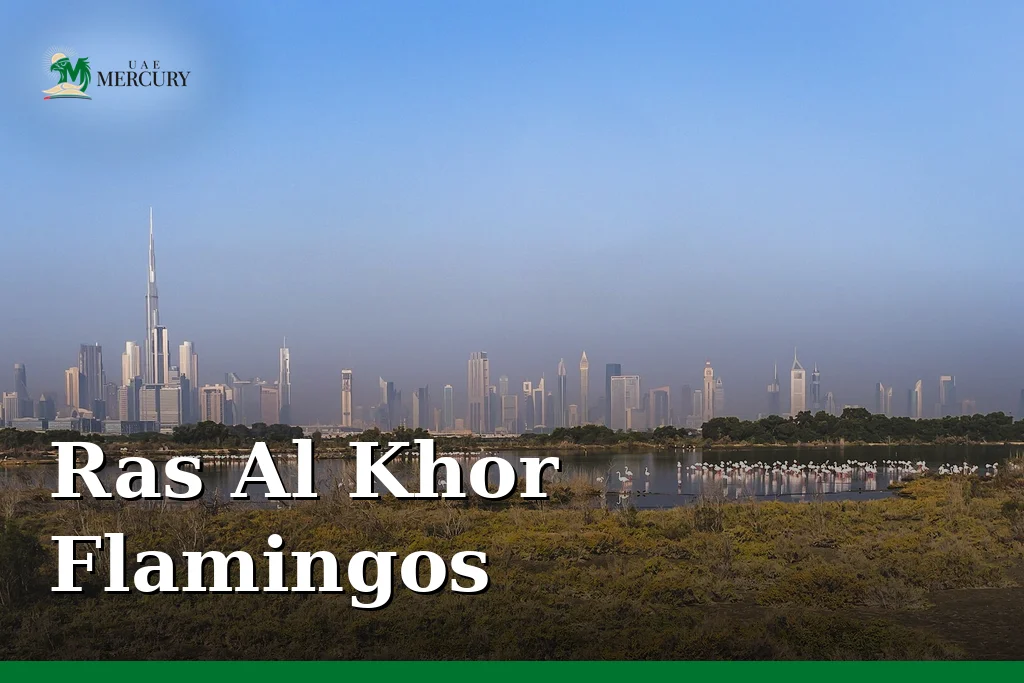
Yes — you can watch thousands of wild pink flamingos for free, right in the middle of Dubai. Ras Al Khor Wildlife Sanctuary sits at the head of Dubai Creek, and its bird hides put you close to one of the city’s most surprising sights: greater flamingos feeding in the shallows with the Dubai skyline behind them. In winter (October to March) the hides are open from 7:30am to 5:30pm, in summer (April to September) from 6:00am to 6:00pm, and on Fridays they open in the afternoon, from 2:00pm. Entry is free and no booking is needed. The best time to go is November to February, between 10am and 4pm, when the flamingos are feeding.
Ras Al Khor Flamingo Sanctuary Timings
These are the seasonal hours published by Visit Dubai and Dubai Municipality. Do check the Municipality’s protected-areas page or call 800900 before you travel — a major redevelopment project is under way and access can change (see the note at the end of this guide).
| Season | Days | Opening Hours |
|---|---|---|
| Winter (October – March) | Saturday – Thursday | 7:30am – 5:30pm |
| Winter (October – March) | Friday | 2:00pm – 5:30pm |
| Summer (April – September) | Saturday – Thursday | 6:00am – 6:00pm |
| Summer (April – September) | Friday | 2:00pm – 6:00pm |
| Flamingo feeding window | Every day | 10:00am – 4:00pm |
Ras Al Khor Wildlife Sanctuary Opening Hours
A few older listings quote shorter hours of 9:00am to 4:00pm. Those figures come from older guides and do not match the seasonal hours Visit Dubai and Dubai Municipality currently publish, so plan around 7:30am–5:30pm in winter and 6:00am–6:00pm in summer, and aim for the 10am–4pm feeding window. The wetland itself is fenced off — all viewing happens from the three bird hides on the perimeter.
Ras Al Khor Friday Timings
On Fridays the hides open later: from 2:00pm, closing at 5:30pm in winter and 6:00pm in summer. If Friday is your only free day, arrive soon after 2:00pm — the flamingos are still in their feeding window, and the late-afternoon light is some of the best for photos.
Ras Al Khor Flamingos Best Time to Visit
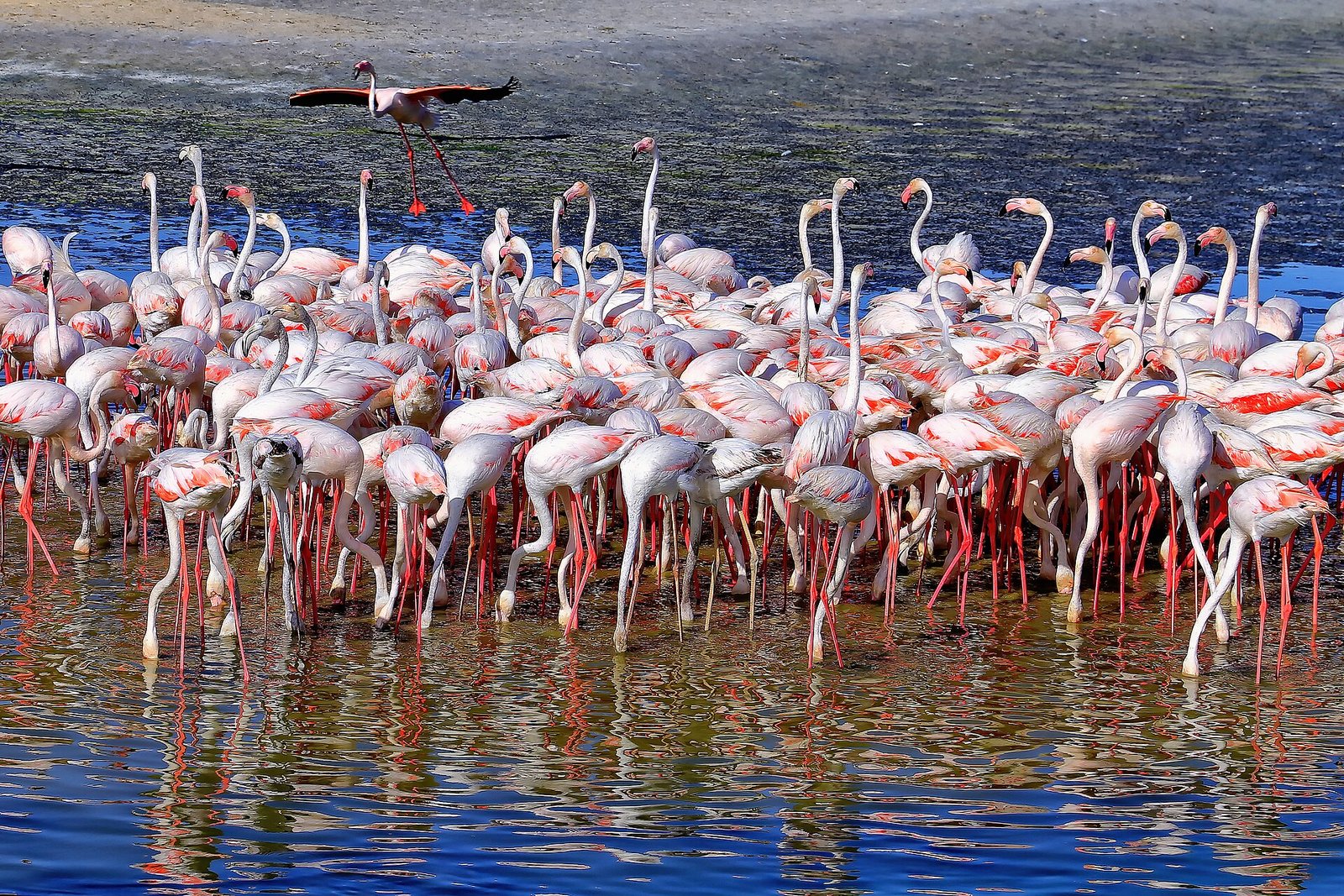
The short answer is winter. Flamingos are at Ras Al Khor all year, but the spectacle peaks between November and March, when migratory birds arrive from Central Asia, Eastern Europe and the Caucasus. Dubai Municipality reports that bird numbers in winter can reach up to 25,000 birds across 201 species. December to February is the peak, when the flocks are at their fullest and the weather is cool enough to sit in a hide for an hour or more.
Ras Al Khor Flamingos Season
| Season | Months | What to Expect |
|---|---|---|
| Peak | November – March | Largest flamingo flocks, most migratory species, cool weather (roughly 16–26°C) |
| Best of the peak | December – February | Flocks at their fullest; best photography light in the late afternoon |
| Shoulder | April & October | Resident birds plus early or late migrants; go early in the morning |
| Off-peak | May – September | Fewer birds, but resident flamingos and herons are still there; visit at the 6:00am opening to beat the heat |
Best Time to See Flamingos in Dubai
Time of day matters as much as season. Visit Dubai lists the flamingo feeding time as 10am to 4pm — that is when the birds are most active in the shallows in front of the hides. Within that window, late morning (10:00–11:00am) and late afternoon (3:00–4:00pm) are the best slots, with softer light and birds feeding close to the hide. In winter, arrive from mid-morning rather than at the 7:30am opening, as the birds sometimes appear a little later on cool mornings. In summer, do the opposite and arrive at the 6:00am opening — the hides have no air conditioning and the heat builds fast.
Ras Al Khor Entry Fee — Is Ras Al Khor Free?
Yes. Entry to Ras Al Khor Wildlife Sanctuary is free for all ages. Visit Dubai states that the bird hides are free to use and no booking is required for individuals and families, and there is no ticket price. Your only cost is getting there.
Do You Need to Book a Visit?
No booking is needed for a normal visit — just turn up during opening hours and walk into a hide. Two things to keep in mind: some recent guides report that walk-in registration may be required on arrival and you may be asked for an Emirates ID, so carry ID with you; and only 15 people are allowed inside a hide at a time, so on a busy winter weekend you may wait a few minutes for space. Free guided tours are also available Sunday to Thursday, 7:30am to 2:00pm, bookable by emailing nrs@dm.gov.ae.
Ras Al Khor Flamingo Hide Location
The sanctuary is a protected wetland at the head of Dubai Creek, on Ras Al Khor Road (E44), a short drive from Dubai Festival City and roughly 10–15 minutes from Downtown Dubai and Burj Khalifa. You cannot walk into the wetland itself — it is fenced off — so all viewing is from three hides around the perimeter.
| Hide | Where It Is | Best For |
|---|---|---|
| Flamingo Hide | Western edge, reached from Oud Metha Road / Ras Al Khor Road (E44), near Dubai Festival City | Closest views of the flamingo roost; free binoculars reported at this hide |
| Mangrove Hide | Southern edge, overlooking mangroves and mudflats | Herons, egrets, spoonbills and waders — temporarily closed as of October 2026, check status before going |
| Lagoon Hide (Al Buhaira) | Edge of the open lagoon water | Mixed species across a wide view — waders, ducks and raptors overhead |
If flamingos are the reason you came, go straight to the Flamingo Hide. It is the one Dubai Municipality advertises for flamingo viewing all year round, and it has its own small free car park. The hide sits at the end of a shielded path that sticks out into the reserve, so the birds feed in front of you without seeing you as a threat.
How to Get to Ras Al Khor
There is no direct metro station or bus stop at the sanctuary gate, so every route ends with a short taxi ride or walk. A car or taxi is the easiest option; public transport works if you plan the last mile.
Ras Al Khor Sanctuary How to Reach by Metro
Take the Dubai Metro Green Line to Creek station (the terminus) or Al Jadaf station, then a taxi for the last stretch — about 5 minutes from Creek station, roughly 3.5 km. Do not plan to walk from the station: the roads around the sanctuary are not pedestrian-friendly. From the Red Line, change at Union or BurJuman onto the Green Line.
By Bus
Bus routes 55, 61, 63E, X23 and E16 pass near the sanctuary. Get off at Aden Street 1 or the Dubai Country Club stop (also listed as Ras Al Khor 1–2), then take a taxi for the final few minutes — or walk about 15 minutes from the Dubai Country Club stop. Use the RTA S’hail app for live times, and remember Dubai buses take Nol cards only, no cash.
By Car or Taxi
Drive via Ras Al Khor Road (E44) or Oud Metha Road and follow the signs to the Flamingo Hide. There is a free car park beside the hide, but it is small — around 20–25 spaces — and it fills quickly on winter weekend mornings, so arrive early or go on a weekday. A taxi from Downtown Dubai or Dubai Festival City takes about 10–15 minutes depending on traffic.
How to Visit Ras Al Khor in 5 Steps
Step 1: Pick your day and time. Choose a November-to-February weekday if you can, and aim to arrive between 10am and 4pm. On a Friday, remember the hides only open at 2:00pm.
Step 2: Check the hide status. Confirm on Dubai Municipality’s protected-areas pages that the Flamingo Hide is open — the Mangrove Hide is temporarily closed and redevelopment works are under way (helpline 800900).
Step 3: Get there. Drive or take a taxi to the Flamingo Hide car park, or take the Green Line to Creek station and a taxi from there. Carry your Emirates ID, water, a hat and sunscreen.
Step 4: Settle into the hide. Enter quietly, keep voices low, and take a spot at the viewing window. Only 15 people are allowed in at a time. Binoculars are provided, but bring your own if you have them — the birds feed at some distance.
Step 5: Watch and wait. Give it at least an hour. The flamingos feed with their heads down in the shallows, and the best photos come when a group moves into good light. Do not feed the birds, leave the hide to get closer, or use flash or a drone.
What to See at Ras Al Khor
Flamingos are the stars, but the sanctuary is far more than one bird. It is a Ramsar Wetland of International Importance — tidal mudflats, salt flats, lagoons and around 47 hectares of mangroves at the head of Dubai Creek. More than 400 bird species have been recorded here over the years.
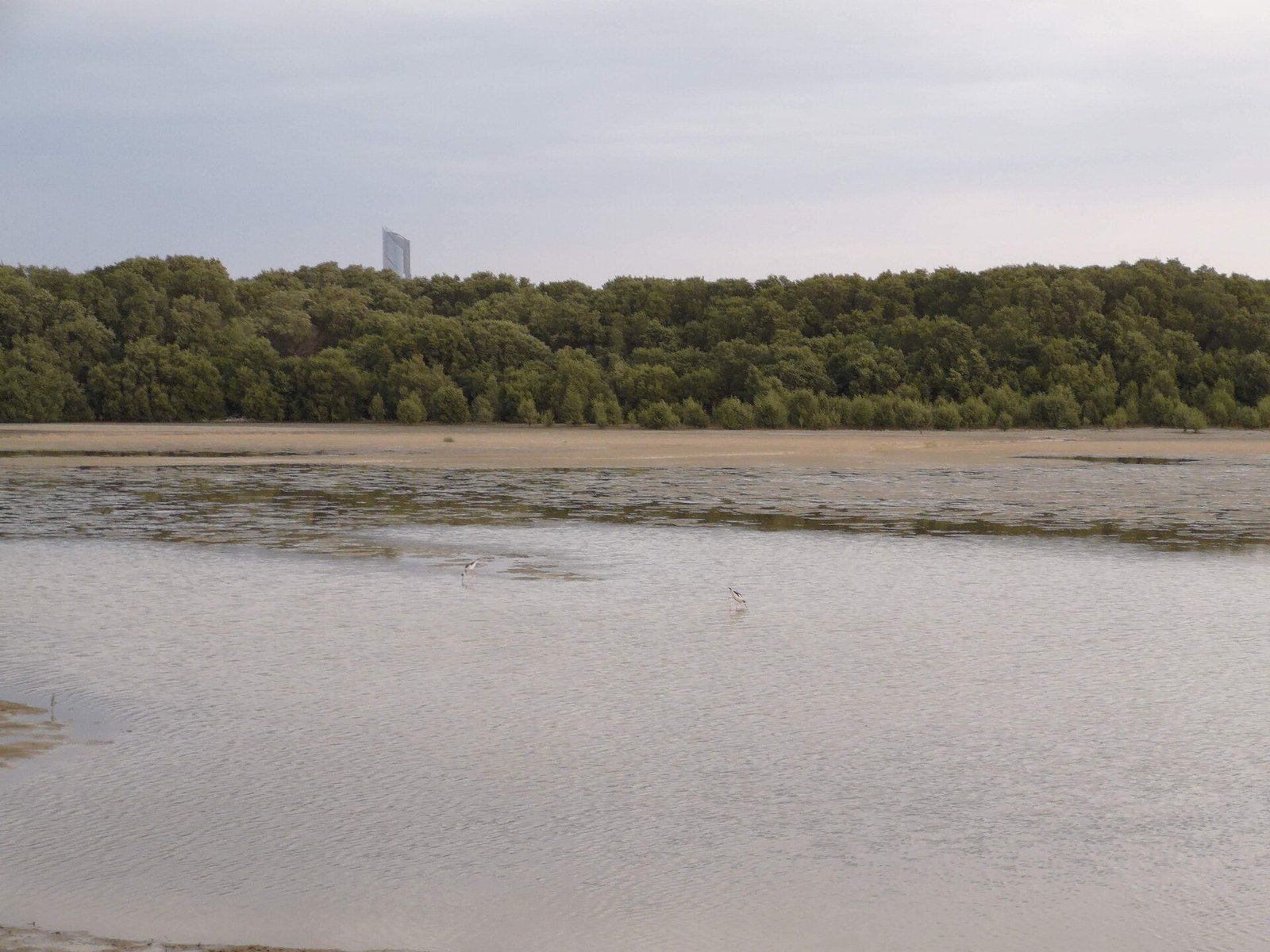
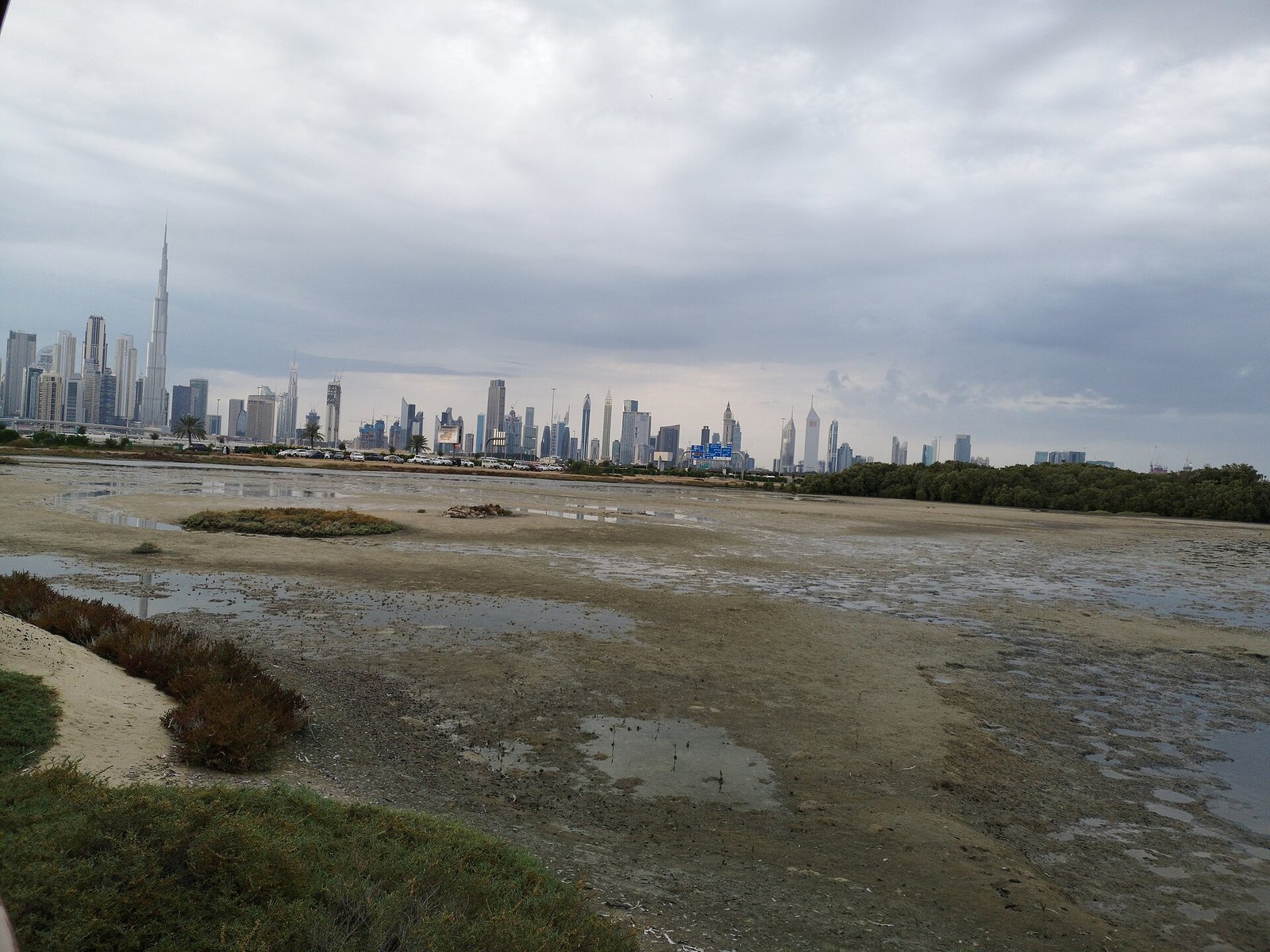
Alongside the greater flamingos, expect grey herons, great egrets, cormorants, spoonbills, avocets, black-winged stilts, pintails, kingfishers and marsh harriers, with rarer visitors such as osprey and crab plover in some seasons. The Mangrove Hide is the best spot for waders among the roots, and the Lagoon Hide gives the widest view across open water. And the setting itself is part of the sight: pink flamingos against the Dubai skyline is one of the city’s most photographed contrasts, which is why the sanctuary sits on so many lists of the free things to do in Dubai.
Can You See Flamingos in Dubai?
Yes — and Ras Al Khor is the easiest place to do it. Wild flamingos live in Dubai year-round: Dubai Municipality describes the Flamingo Hide as an all-year observation point, so even in summer you can expect to see resident birds, just in smaller numbers. Winter is when the migratory flocks arrive and numbers swell into the thousands. A sighting on any given day is never guaranteed — birds move with the tide and the feeding schedule — but the Flamingo Hide is the most reliable spot in the city, and it costs nothing to try. Pair it with one of the best public beaches in Dubai for a sunset walk afterwards.
Ras Al Khor Photography Tips
The flamingo-versus-skyline shot is the reason many photographers come here, and the hides are built for it — covered, shaded, and placed so the birds do not see you. A few things that make the difference:
- Bring a zoom lens. A telephoto in the 200–600mm range is ideal. A phone captures the scene and the skyline well, but it will rarely show detail on a single bird far out in the lagoon. Binoculars are provided at the hides for watching.
- Shoot in the golden hours. Early morning and late afternoon give the softest light. The 3:00–4:00pm slot combines feeding activity with warm light — and the Dubai skyline sits directly behind the shallows, so frame low for pink birds or step back to include the towers. For more skyline angles, see our guide to the best photo spots in Dubai.
- Turn the flash off. Flash is not allowed in the hides, and it reflects off the viewing windows. Steady the camera against the window ledge instead of using a tripod in a crowded hide.
- Be patient. Wait for the birds to move into the light rather than chasing them. Stay inside the hide, do not lean out, and never fly a drone over the protected habitat.
Before You Go: The 2026 Redevelopment Note
Dubai Municipality is carrying out a major development project at Ras Al Khor — about AED 650 million in total, with the first phase expected to finish by the end of 2026. Khaleej Times reported in July 2025 that the sanctuary had temporarily closed as part of that work, and as of October 2026 the Municipality’s booking page still marked the Mangrove Hide as temporarily closed, while listing the Flamingo Hide and Lagoon Hide without a closure note. The timings and free entry in this guide reflect the latest published information as of 17 November 2026 — but confirm the day’s opening on the Municipality’s protected-areas platform or by calling 800900 before you travel.